
-43%
-
In stock
Recommended price
648.29
-43%
366.67
Item number: 19120554


During the installation or replacement of a mechanical ventilation unit, things are sometimes overlooked. Too many bends in the ducts, an incorrectly connected switch or a ventilation unit in the wrong place — these are things that directly affect the performance of your new MV system. Do you want to install mechanical ventilation yourself, install a ventilation unit or find out how to correctly connect a ventilation unit? In this blog you'll read everything about installing and connecting mechanical ventilation. From the right mounting position and connecting the 3-speed switch to sound insulation and tips for installing in an old house or existing home.
In this blog you'll read about, among other things:
Yes! For some, it's even the ideal DIY project. Mechanical ventilation is most commonly found in existing homes and older buildings — new-build properties are increasingly being fitted with heat recovery ventilation (MVHR) systems. You generally don't need any special tools, and the system is designed for straightforward installation. What you do need to keep in mind is the correct layout and length of the ventilation ducts, the number of bends, and a proper electrical connection. Particularly in existing homes, the installation requires a bit more time and preparation, as the ducts may need to run through walls, floors, or a crawl space.
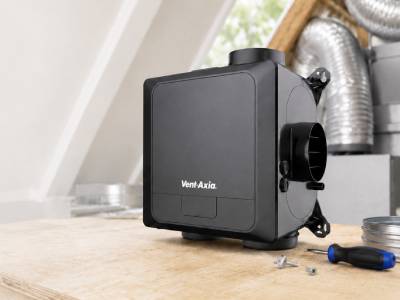
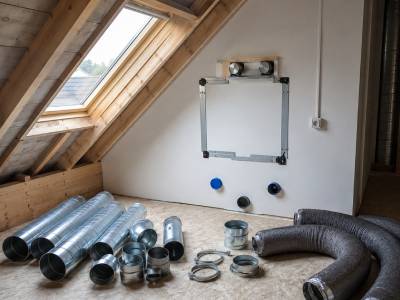
Ideally, you decide on the location of your MEV unit as early as possible in the installation process, as the position directly affects the routing and length of the ventilation ducts. In most cases, the unit is installed in the loft. This has several practical advantages: there is generally plenty of space to work comfortably, the distance to the roof or wall outlet is short, and the duct running down to the bathroom one floor below benefits from a downward flow. This results in lower resistance (measured in Pascals), allowing the unit to operate more quietly. If a loft installation is not possible, alternatives include a utility room, meter cupboard, or crawl space — in any case, choose the location that keeps the exhaust duct to the outside as short as possible.
A mechanical ventilation unit always has one exhaust direction. Always take this into account when positioning it! Ideally, the exhaust direction points directly towards the roof terminal or an exterior wall grille. Most MV units can be installed in several ways:
Tip: Is the available space limited? Then look for a flat or compact MV unit. You can always find which mounting positions are possible for your specific model in the installation manual.
A mechanical ventilation unit has two types of connections: several connections on the home side and one fixed exhaust connection to the outside. This is an important difference compared with a heat recovery ventilation system — with mechanical ventilation, the unit only extracts air. Fresh air does not enter through the unit, but through window vents or gaps.
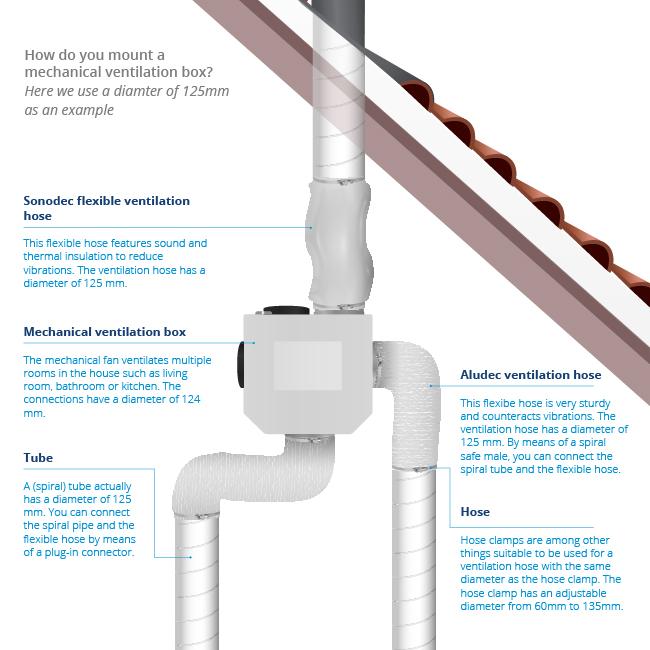
The connections on the home side connect the unit via ducts to the valves in the wet rooms. Think of the bathroom, toilet and kitchen. One ventilation duct runs back to the unit from each room. Unused connections must always be sealed with a cover or plug to prevent uncontrolled air from being drawn into the system.
Every ventilation unit has exactly one exhaust connection — the opening through which all extracted air is discharged outside via a roof terminal or exterior wall grille. This connection is always open upon delivery and must never be sealed. Keep the exhaust duct to the outside as straight and short as possible: every additional bend increases resistance and reduces the performance of your system.
Important: are you unsure or unable to complete the installation? Then call in a certified installer!
Professional installation prevents mistakes that could cause problems later and gives you the assurance that your system will work correctly straight away.
Item number: 19120554

Item number: 72621008
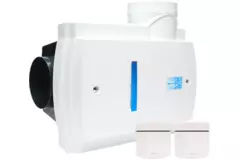
Item number: 19130026
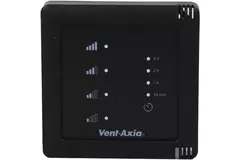
Item number: 19120531

Item number: 72600012

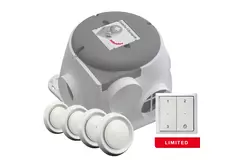
Item number: 19120513
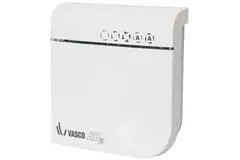
Item number: 19150113
Item number: 19130111
Item number: 19130015

Item number: 19150014
Item number: 72500112
Item number: 19120531

Item number: 19120523
Item number: 19130026
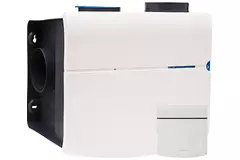
Item number: 19130014
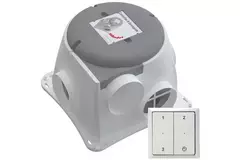
Item number: 19120504
Every MVHR unit has four connections: two on the indoor side and two on the outdoor side. The location of these connections on the unit varies by type and version. Below you'll find an overview of the most common versions and what each connection does.
* Depending on the type, this may vary slightly. Always refer to the installation manual of your MVHR unit.
Every mechanical ventilation unit is supplied with a plug. The type of plug your unit has directly determines which control options you have. There are two versions:
A Perilex plug has five connections:

The two switch wires enable operation via a fixed, wired 3-speed switch. The speeds are controlled through the switch wires: speed 1 is the lowest (continuous) setting, while speed 3 is the highest (boost) setting. This always requires a direct wired connection between the 3-speed switch and the Perilex socket. There must be no extension lead or intermediate switch between them. Please note: not every ventilation unit is available with a Perilex plug. Always check this in advance in the product specifications.
Most modern mechanical ventilation units are supplied with an earthed plug. This works via three connections: a live wire, a neutral wire and an earth wire. This version is operated via a wireless RF remote control, a built-in humidity sensor or, in newer models, via an app. A wired 3-speed switch is not possible with an earthed plug — if you want a fixed switch, you need a Perilex version.
Tip: Are you replacing an existing ventilation unit with a Perilex connection? Then check whether the new unit is also available in a Perilex version, so you can reuse the existing switch and wiring. Want to know more about the difference between both plugs? You can read about it in our blog: ‘Should you choose a Perilex or earthed plug?’

With a mechanical ventilation unit, you use two different types of ventilation ducting, each with its own application:
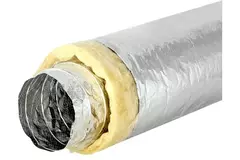
Acoustic ducting — is used on the home side and runs from the ventilation unit to the ventilation valves in the wet rooms (bathroom, etc.). The small holes in the inner foil provide a strong sound-dampening effect, so that noise from the MV unit does not travel through the ducts into the home.

Thermal (insulated) ducting — is used on the exhaust connection, from the ventilation unit to the roof terminal or exterior wall grille. With mechanical ventilation, the unit extracts warm, humid air from the bathroom, toilet and kitchen. If this air passes outside through a non-insulated duct, it cools down quickly, resulting in condensation. Thermal insulation prevents this. Unlike with a heat recovery ventilation system, heat retention does not play a role here; it is purely about preventing condensation.
Tip: The use of thermally insulated ducting on the exhaust side is required by many manufacturers to maintain the warranty. Always check this in the small print of the installation manual.
On the home side, a heat recovery ventilation unit is always connected with silencers to prevent noise from the unit from entering the home through the ducts. You can choose between rigid and flexible silencers — we explain the difference below.
Rigid silencer — dampens significantly more noise than a flexible version, creates less resistance and is easy to clean. The disadvantage: it is not flexible and therefore requires sufficient straight space in the duct.

Flexible silencer — bendable and therefore useful in tight utility rooms or with difficult duct routes. It dampens less noise and creates more resistance, but is often the only practical option when space is limited. The most commonly used size for mechanical ventilation is Ø 125 mm.
Crosstalk attenuators — are small dampers that you place directly in the duct before the valve. They prevent voices and sounds from travelling through the ventilation ducts from one room to another. A useful addition, but not a replacement for a silencer on the unit itself.
Tip: Are you experiencing more noise than expected after installation? First check whether all duct connections are properly sealed. Even a small air leak can cause audible noise.
How you control a mechanical ventilation unit depends on the type of unit and the chosen connection. There are several options:
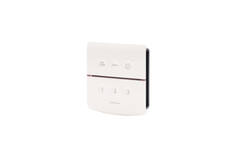
Fixed 3-speed switch — the most traditional control method, widely used in existing homes. With a wired switch, you manually set the unit to speed 1 (low/continuous), speed 2 (medium) or speed 3 (high/boost). Requires a Perilex connection.
Wireless RF remote control — a popular option for units with an earthed plug. You control the unit wirelessly from any room, without additional wiring. Useful for renovations or when no Perilex socket is available.
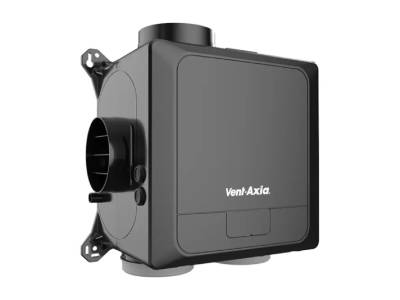
MVHR units are available in different versions, each with their own controls and functionalities. Most modern systems can be controlled wirelessly via an RF remote control or a wall control. Additionally, there are more and more systems with extended features, such as:
Installing mechanical ventilation in an existing home requires more preparation than in a new-build property. The duct routes are not immediately fixed, you have to work around existing walls and floors, and sometimes you need to be creative to conceal everything neatly. With the right approach, it is perfectly manageable, even without major or invasive renovation work.
This is the simplest situation. The existing ducts have already been installed — in most cases, you only need to replace the unit itself. Check in advance whether the new unit has the same connection diameters and whether the existing wiring (Perilex or earthed plug) is compatible. Are the ducts old and dirty? Then this is the ideal time to have them cleaned before the new unit is connected.
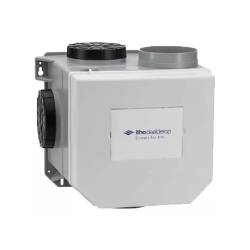
Then it starts with proper planning of all ventilation ducts and routes. First decide where the ventilation unit will be placed, then draw out the route from the unit to each valve. Take the following into account:

Ready to get started with your MV DIY project? We have the largest range of mechanical ventilation units in the Netherlands! From top brands such as Itho Daalderop, Orcon, Zehnder, Duco, Vent-Axia and Vasco. Whether you are looking for a separate ventilation unit or a complete set including valves: you will find everything you need for a proper installation in one place.
Do you not yet know which MV unit best suits your situation? Our specialists will be happy to help you choose! You can reach us via WhatsApp, chat, e-mail or by phone.
At Ventilationland, we think it is important that we can always be reached and answer your questions as quickly as possible. Therefore, you can reach us in several ways, including via chat or WhatsApp. We are happy to help!