
-
In stock
2,199.53
Item number: 19221004

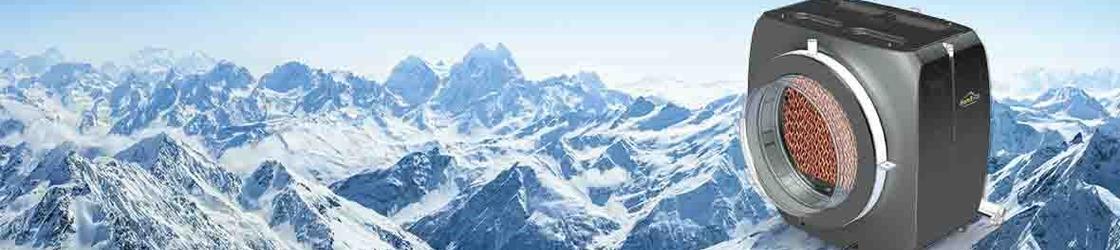
An MVHR unit keeps your home supplied with fresh air all year round. But did you know that you can also use the same ventilation system to cool your home on warm days? With adiabatic cooling, also known as evaporative cooling, you use water to cool the air. Your MVHR unit does the rest. This creates a pleasant, cool indoor climate in your home on warm days, without needing a separate cooling system with an outdoor unit. Handy, right?
In this blog, we explain exactly what adiabatic cooling is and how an adiabatic cooler works together with your MVHR unit. In a worked example halfway through this article, you'll see how much cooler the fresh air is when it enters your home. You'll also find out which type of MVHR unit adiabatic cooling works with, where to install the cooler and how the cooler decides for itself when cooling is useful/cost-effective.
The key points from this blog at a glance:
Adiabatic cooling is a method of cooling in which water evaporates in an airflow. Water needs heat to evaporate. The water takes that heat from the air itself. As a result, the temperature of the air drops, while the humidity rises.
The word adiabatic means that no heat is added or removed from outside. In an adiabatic process, the total amount of energy in the air therefore stays the same. The energy simply shifts: part of the heat in the air is used to evaporate water. The result is air that is cooler and more humid. Adding water vapour in this way is called adiabatic humidification. You notice the same effect when your wet skin dries in the wind: the evaporating water feels cool.
Good to know: the lower the relative humidity (RH), the more water can evaporate and the more the air cools down. Relative humidity indicates what percentage of the maximum amount of water vapour is already in the air. For a comfortable and healthy indoor climate, a relative humidity of 50 to 60% is recommended. If the humidity in your home stays within this range, adiabatic cooling works well. If the air in your home is more humid than 60% RH, less water can evaporate and the MVHR cooler cools the air less effectively.
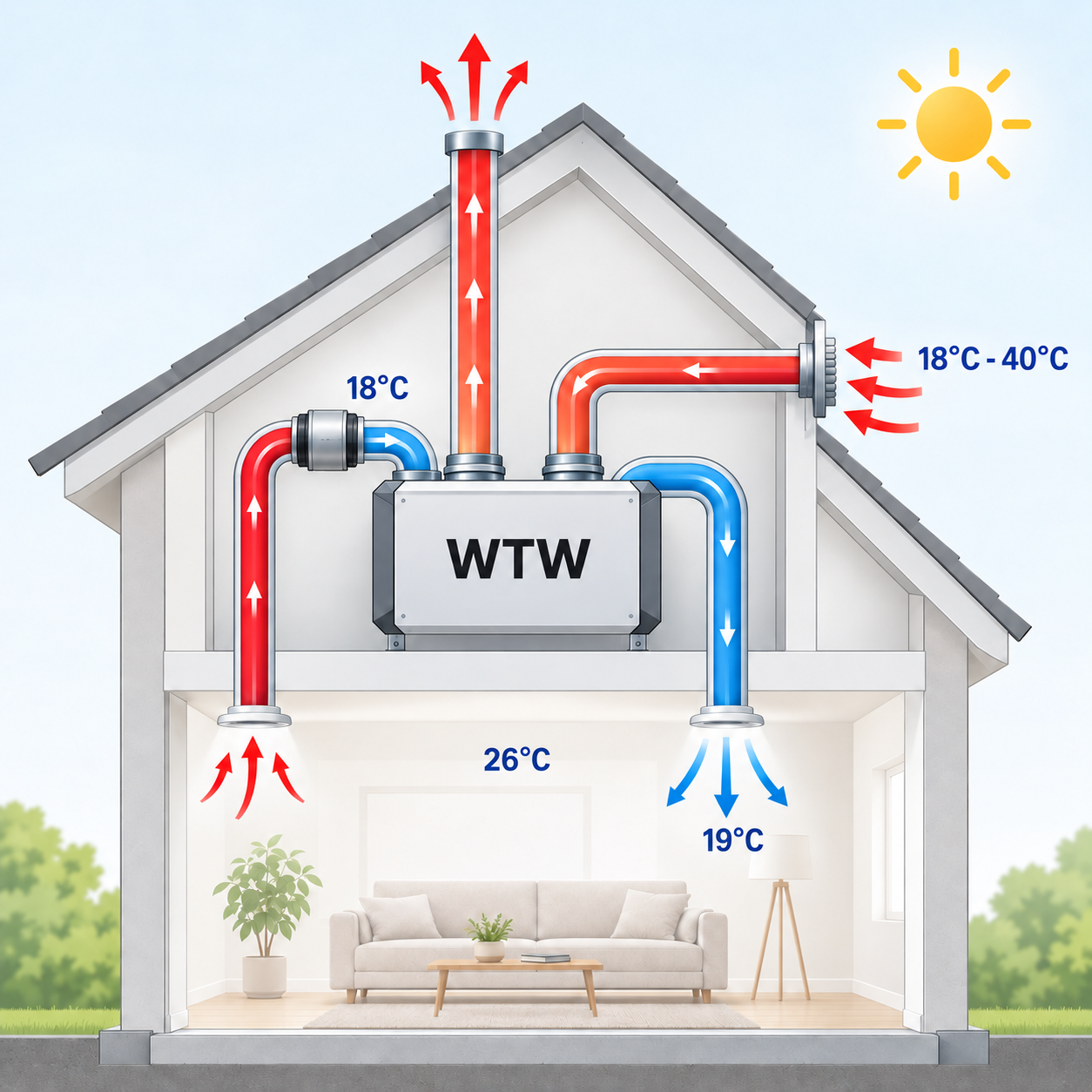
An MVHR unit (a mechanical ventilation system with heat recovery) extracts stale air from your home and blows fresh outdoor air in. Both airflows pass through a heat exchanger without mixing. Heat always moves from the warmer airflow to the cooler one. In winter, the extracted indoor air warms up the cold outdoor air in this way. On a hot summer's day, the opposite happens: the warm outdoor air then transfers part of its heat to the cooler indoor air that is leaving the house.
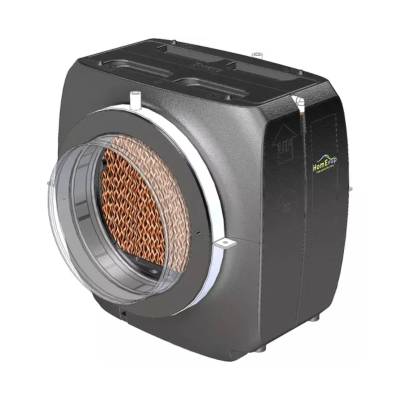
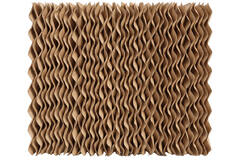
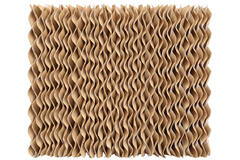
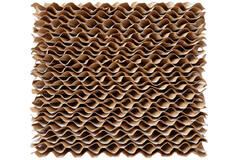
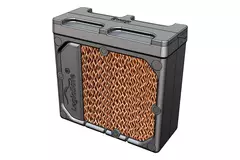
An adiabatic cooler, also known as an MVHR cooler, makes use of this summer effect. The MVHR cooler is fitted on the extract duct on the house side of the MVHR unit. This is the ventilation duct that carries the extracted air from your home to the MVHR unit. Inside the MVHR cooler, this 'extract air' flows through a wetted matrix. This is a structure that is kept wet at all times.
Good to know: the water evaporates and the extract air cools down before the extract air reaches the heat exchanger. The colder this extract air, the more heat the extract air can absorb from the warm outdoor air. This means cooler fresh air enters your home.
The extra moisture is carried outside together with the extract air. The fresh air entering your home therefore picks up no extra water vapour. That is why this is also called indirect adiabatic cooling.
1
Extract air from your home
The air extracted from your home, for example at 21 °C, flows through the extract duct to the MVHR cooler.
2
Cooling in the MVHR cooler
Water evaporates in the wetted matrix. As a result, the extract air cools down to, for example, 16 °C.
3
Heat exchange
In the cross-flow heat exchanger, the cool extract air absorbs heat from the warm outdoor air.
4
Cooler fresh air
The cooled outdoor air flows into your home. The moisture leaves the house with the extract air.
How much cooling with MVHR achieves depends on the efficiency of your MVHR unit and the temperature difference between the outdoor air and the extract air. How exactly does that work? We'd like to explain it with a simple worked example. Suppose you have an MVHR unit with a cross-flow heat exchanger and an efficiency of 90%. It is 30 °C outside and 21 °C indoors. With an efficiency of 90%, the heat exchanger transfers 90% of the temperature difference between the outdoor air and the extract air.
| Without MVHR cooler | With MVHR cooler | |
|---|---|---|
| Outdoor air temperature | 30 °C | 30 °C |
| Extract air temperature at the heat exchanger | 21 °C | 16 °C |
| Temperature difference | 9 degrees | 14 degrees |
| Transferred at 90% efficiency | 8.1 degrees | 12.6 degrees |
| Temperature of incoming fresh air | 21.9 °C | 17.4 °C |
This is just a worked example. The actual temperature depends on factors such as humidity, airflow volume and the efficiency of your MVHR unit.

Without an MVHR cooler, the fresh air in this example enters your home at 21.9 °C. With the MVHR cooler, it is 17.4 °C, in other words 4.5 degrees cooler. On a warm day, you notice this temperature difference straight away.
You might think it would be more convenient to cool the fresh air directly by fitting the MVHR cooler on the supply duct. We strongly advise against this! On the supply duct on the house side, the MVHR cooler would blow the water vapour straight into your home. In summer, outdoor air is often already humid. When extra water vapour is added to it, the air indoors becomes (too) clammy. Excessive humidity can lead to mould on walls, ceilings and in cupboards.
A different device belongs on the supply duct on the house side: the MVHR humidifier. It also works with adiabatic humidification, but with a different purpose. In winter, the air indoors is often very dry. The MVHR humidifier then adds moisture to the fresh air, so that the humidity in your home stays comfortable.
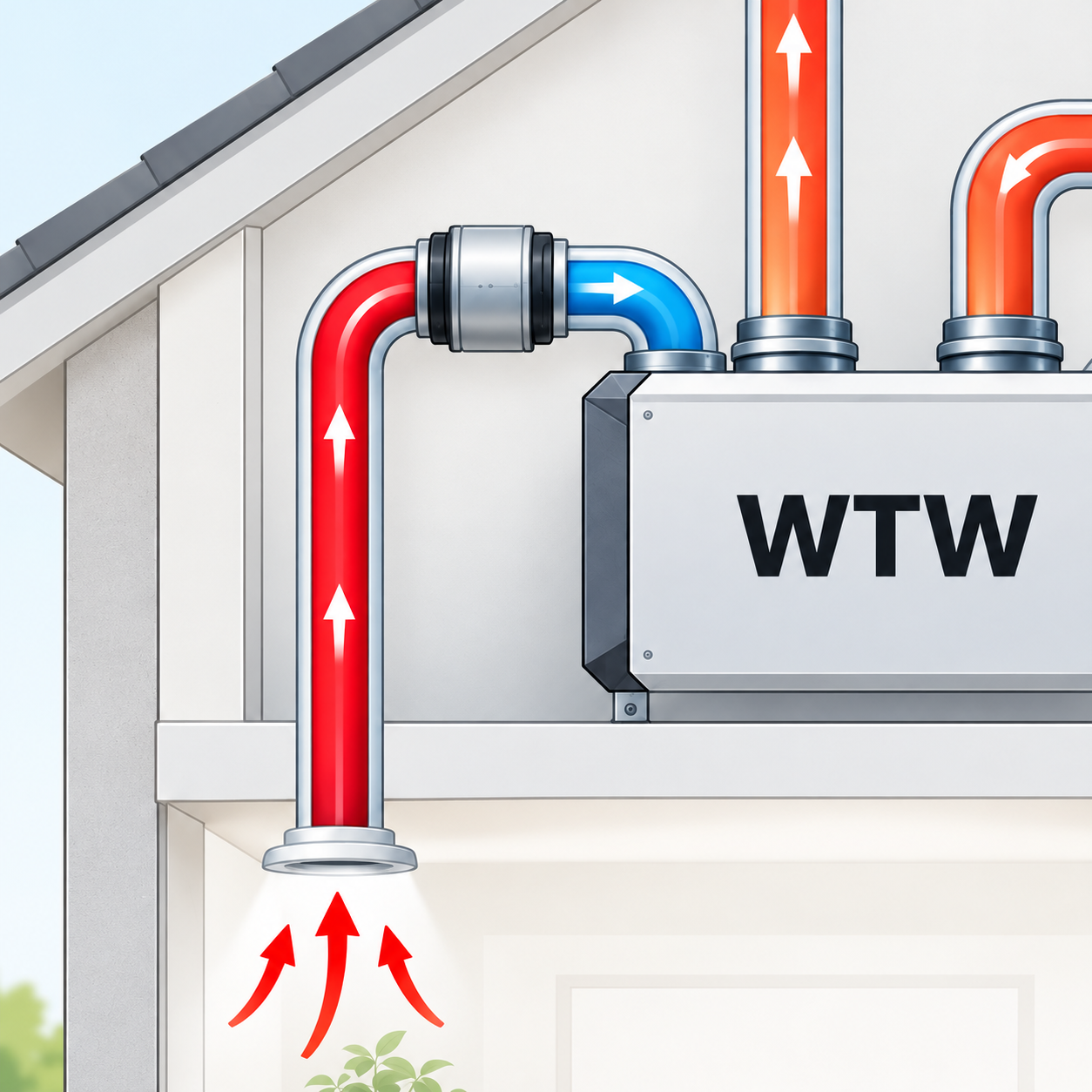
An adiabatic cooler is a standalone device. This means you can combine the cooler with any brand of MVHR unit. There is one important condition, though: adiabatic cooling only works well with an MVHR unit with a cross-flow heat exchanger.
A cross-flow heat exchanger only transfers heat between the two airflows. The moisture that the MVHR cooler adds to the extract air is therefore simply carried outside. An enthalpy exchanger transfers moisture as well as heat. With an MVHR unit with an enthalpy exchanger, the moisture from the MVHR cooler would therefore end up in the fresh air entering your home. The humidity indoors then becomes very high and the air feels clammy and unpleasant. You can check the specifications of an MVHR unit to see whether the product has a cross-flow heat exchanger. Is information missing or are you unsure? Then get in touch with our specialists! They'll be happy to help.
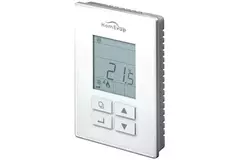
Cooling a house with an MVHR unit is not always useful. That is why the MVHR cooler measures the temperature with built-in sensors. These are located, for example, in your home and in the duct that carries outdoor air to the MVHR unit. On the MVHR cooler, you set the desired indoor temperature, for example 21 °C. Based on these measurements, the MVHR cooler decides for itself whether cooling is useful. Here are four situations:
Cooler on
Warm day
It is warmer outside than inside, and warmer inside than your set temperature. The MVHR cooler cools the extract air.
Cooler off
Desired temperature reached
Has the indoor temperature dropped to the temperature you set? Then the MVHR cooler switches itself off.
Cooler off
Cool summer night
Is it cooler outside than inside? Then the bypass of your MVHR unit opens and the MVHR cooler switches off.
Cooler off
Winter
The MVHR cooler stays off. The extract air needs to stay as warm as possible to warm up the cold outdoor air.
The bypass is a damper in the MVHR unit that routes the fresh outdoor air around the heat exchanger. This lets the cool night air enter your home directly, without the warmer extract air heating it up. Because the fresh air then does not pass through the heat exchanger, cooled extract air cannot cool the fresh air either. An MVHR cooler that kept running would only waste water and energy.
Considering adiabatic cooling for your home? Below you can see at a glance what it offers and what you need to bear in mind.
Advantages
Points to consider
Do you already have an MVHR unit with a cross-flow heat exchanger? Then the HomEvap MVHR cooler is a logical addition. Would you like to control the MVHR cooler with your own control system, such as a smart home system? Then choose the HomEvap MVHR cooler suitable for external control.
Would you like a comfortable indoor climate all year round, with cooling in summer and humidification in winter? Then the HomEvap MVHR All Season humidifier and cooler combines both functions: the cooler on the extract duct and the humidifier on the supply duct on the house side.

Don't have an MVHR unit yet? Then ideally choose an MVHR unit with a cross-flow heat exchanger and a bypass. That way, you'll get the most out of an MVHR cooler later on. Browse all HomEvap MVHR coolers and humidifiers in our range, or contact our customer service team for personal advice on cooling with your MVHR system.
Item number: 19221004
Item number: 19221015
Item number: 19221018
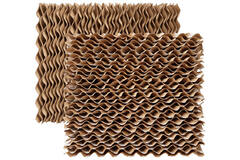
Item number: 19221017
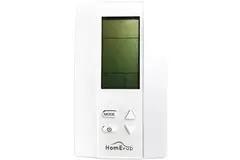
Item number: 19221005
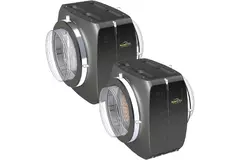
Item number: 19221003
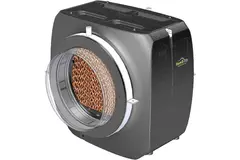
Item number: 19221012
Item number: 19221008
Item number: 19221016
Item number: 19221024
Item number: 19221019
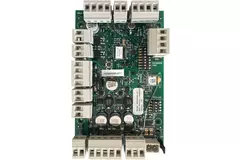
Item number: 19221010
Item number: 19221021
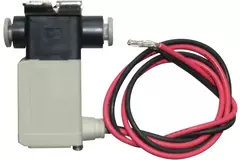
Item number: 19221009
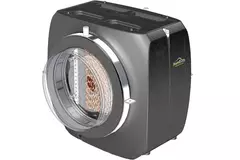
Item number: 19221001
Item number: 19221002
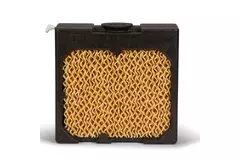
Item number: 19221007
Item number: 19221014
Item number: 19221006
Item number: 19221011
In the FAQ below, we've put together the most frequently asked questions about adiabatic cooling with an MVHR unit. Do you have specific questions about your MVHR unit or can't quite work it out? Our experts are here to help, so feel free to get in touch!
In adiabatic cooling, water evaporates in an airflow. This evaporation requires heat, and that heat comes from the air. This lowers the air temperature without a refrigerant or compressor. In a home with an MVHR unit, an MVHR cooler uses this principle to cool the extracted air, which then cools the incoming outdoor air in the heat exchanger.
A little. On a warm day, the warm outdoor air already transfers some heat in the heat exchanger to the cooler indoor air that is leaving the house. On cool nights, the bypass lets the fresh outdoor air straight in. With an MVHR cooler, the cooling effect during the day is greater, because the extracted air is cooled down extra first.
No, as long as the MVHR cooler is fitted on the extract duct and your MVHR unit has a cross-flow heat exchanger. The evaporated water then leaves your home together with the extracted air. With an enthalpy exchanger, or if the cooler is fitted on the supply duct, the moisture does get into your home, which is why we advise against it.
Both evaporate water, but for a different purpose and in a different place. The MVHR cooler sits on the extract duct and provides cooler fresh air in summer. The MVHR humidifier sits on the supply duct on the house side and makes dry winter air more humid.
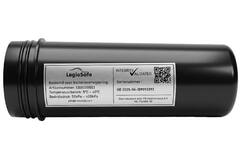
After the wetted matrix, the air in the HomEvap MVHR cooler passes through a LegioSafe legionella filter. This filter is designed to prevent legionella bacteria from being carried along with the air.
At Ventilationland, we think it is important that we can always be reached and answer your questions as quickly as possible. Therefore, you can reach us in several ways, including via chat or WhatsApp. We are happy to help!