




Free shipping from 100,-
100 day return period
Price Incl Vat

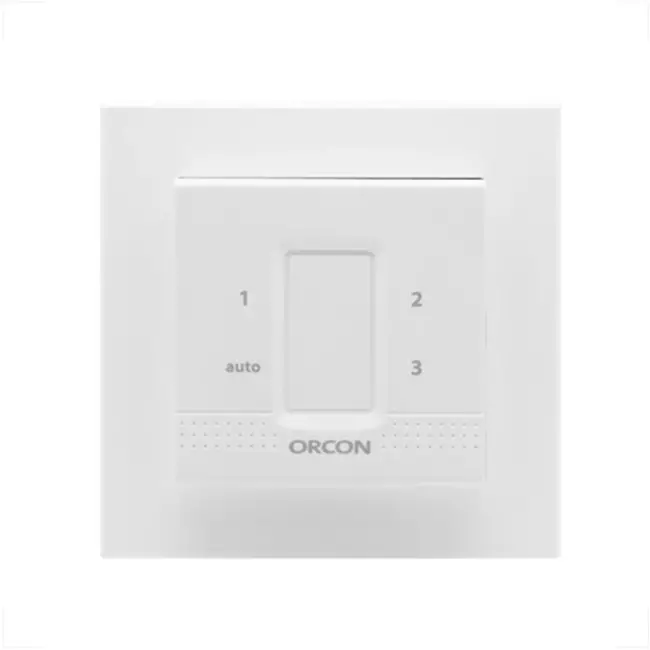
Orcon CO2 built-in control sensor 15RF

Brand: Orcon


Orcon CO2 built-in control sensor 15RF
-25%
RRP 257.04
192.78 -25%
You'll save 64.26
  • In stock
  • The largest collection in the United Kingdom
  • 100 day return period
  • Customer review 9/10
  • Safe shopping with Trustedshops

Pay safe and fast with:

  • Creditcard
  • PayPal
  • Apple Pay

Good points

  • Brand: Orcon

CO2 Built-in Sensor 15RF

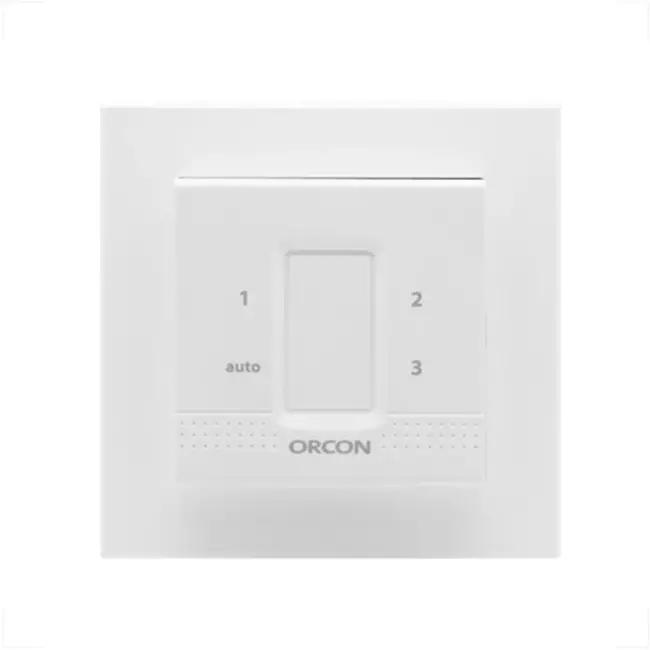
This CO2 built-in control sensor combines a control unit and CO2 sensor in one, allowing you to enjoy both healthy indoor air quality and convenient control of your fan. With this built-in sensor, you can regulate based on CO2 levels and manually select your desired ventilation setting (low, medium, or high). It also features an energy-saving mode and an Exceptional mode, where the fan is automatically controlled based on CO2 concentration. The Orcon CO₂ control sensor connects wirelessly to the unit but always requires a 230V power supply to operate.

The built-in control sensor supports all Orcon MVS-R and HRC models produced after 2014. The control sensor can be installed in a flush-mounted wall box. The display fits any standard 55 mm mounting frame and is supplied as standard with a Peha single frame. Please refer to the manual for further details.

Brand Orcon
Category Orcon MVHR Units Parts and Accessories
GTIN 8718403863376
Manufacturer's item number 21800050
Article number 19130116

Specifications

Category code 108
Scope of application Room
With mounting material Yes
Suitable for wall mounting Yes
Suitable for ceiling mounting No
Suitable for duct mounting No
Suitable for tube mounting No
Suitable for air Yes
Suitable for liquids No
Suitable for gases No
With housing Yes
Cover attachment Snapped on
Sensor element inside housing Yes
Sensor element outside housing No
Fixed cable to sensor No
Technology NDIR
Number of measuring points 1
Measurement of CO2 Yes
Measurement of VOC No
Measurement of relative air humidity No
Measurement of absolute air humidity No
Enthalpy measurement No
Measurement of dewpoint No
Particulate matter measurement (PM) No
CO2 measuring range (min) 400 ppm
CO2 measuring range (max) 2000 ppm
Number of measuring ranges 1
Offset setting possible No
Trend representation No
Error registration possible Yes
Sensor type Other
Tolerance 2 %
Potentiometer with adjustment knob No
Supporting protocol for BACnet No
Supporting protocol for MP (multi point) No
Supporting protocol for KNX No
LoRa technology No
NFC (Near Field Communication) No
Bluetooth No
Wi-Fi-compatible No
Standby push button Yes
Wireless Yes
With display No
Type of power supply Power cord
Type of electric connection Screw connection
Rated supply voltage AC (min) 220 V
Rated supply voltage AC (max) 230 V
With reverse polarity protection No
Number of output signals 1
Number of output ranges 0 V ... 10 V 1
Max. ambient humidity (non-condensing) 90 %
Explosion-proof No
Degree of protection (IP) IP30
Housing height 100 mm
Housing width 100 mm
Housing depth 23 mm
Housing colour White
Compatible with Apple HomeKit No
Compatible with Google Assistant No
Compatible with Amazon Alexa No
IFTTT support available No

Reviews

Blogs

See all blogs
CO2 level in a room gives indication of likelihood of corona contamination
Recent research has examined the relationship between CO2 and the spread of COVID-19 in classrooms and offices. Scientists have developed a new model to predict the risk of infection with corona. They have done this based on the amount of CO2 present there. This model highlights the importance of proper ventilation in workplaces and schools. The model was developed by researchers from Imperial College London, the University of Cambridge and the University of Leeds.

  • Felix Dijkmeijer
  • 05-10-2021
Clean air for World Animal Day
Animal Day, the day we put an extra spotlight on our dear dogs, cats, rabbits, guinea pigs, etc.! As much as we love our pets, we cannot deny that they produce foul odors, dander, hair and moisture, as well as emitting CO2. Both long-haired, short-haired and hairless animals create indoor pollution. These pollutants cause indoor air quality to deteriorate. Fresh air is incredibly important, both for you and your pet. Want to treat yourself and your pet more and not just on Animal Day? Treat your personal pet and yourself to a clean environment!
  • Joris Smeur
  • 04-10-2021
How important is healthy air quality at your workplace?
How important is good air quality in your workplace?Posted on 8-9-2021 by Anouk Wigchert We spend almost 90% of our time indoors, much of it at work. A healthy workplace seems obvious, but it's not. Whether you work at home, at the office or change work locations, healthy air quality contributes to people's productivity and absenteeism. In this blog, we'll tell you more about healthy air quality in your workplace.
  • Felix Dijkmeijer
  • 08-09-2021
How do I measure the air quality in my home?
How clean is the air in your home, really? With a simple check, you can find out in no time. Measuring the air quality in your own home is actually not complicated at all! With a CO2 monitor or particulate matter meter (sometimes also called an air quality meter), you can see straight away whether the air quality in your home is good (enough) or not. If it isn't, you immediately know that extra ventilation is needed. In this blog, we explain how you can measure the air quality at home quickly and easily, what healthy indoor air quality actually means, which substances can cause poor(er) air quality, and what the relevant requirements and regulations are.
  • Joris Smeur
  • 10-09-2026