

How do you install an inline tube fan?

A musty-smelling bathroom, a kitchen full of cooking fumes, or a room where the air never really seems to freshen up. All moments when you're longing for some fresh air. An inline duct fan is often the perfect solution! Especially when a certain distance needs to be bridged within the ventilation ducts. But how do you actually install and mount an inline duct fan the right way? In this blog, we'll tell you exactly what you need to know: from the best spot in the ventilation duct to a safe, future-proof connection. You'll also find a handy installation video here, where we explain the installation of an inline duct fan step by step.
The key points from this blog at a glance:
- You install an inline duct fan via a fixed, hardwired power connection, not a plug;
- Inline duct fans are most efficient for ventilating large spaces, combined with long ducts and a lot of resistance;
- You mount an inline duct fan between two ventilation ducts, or slide it (for slide-in models) into the duct;
- If you connect an inline duct fan with a timer, it automatically keeps running for a little while after use;
- Usually, one inline duct fan serves one extraction point, rather than several;
- You always place an inline duct fan in a dry spot in the ventilation duct, never in the (humid) room itself.
What is an inline duct fan?
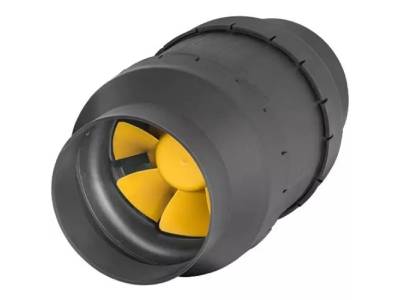
An inline duct fan is a high-capacity extractor that you install in a ventilation duct. It's precisely that high capacity that makes an inline duct fan ideally suited for large spaces, long ventilation ducts, and situations with a lot of resistance in the duct: the higher the capacity, the more easily the fan overcomes that resistance. For smaller spaces with less resistance, a lighter solution, such as a regular bathroom fan, is often the better choice. Installing an inline duct fan isn't simply a matter of plugging it into a socket, by the way: the fan needs a fixed, hardwired power connection. Use the button below to view our complete range of inline duct fans straight away. Here you'll find various types, suitable for every situation!
Mounting between two ducts, or sliding into an existing duct?
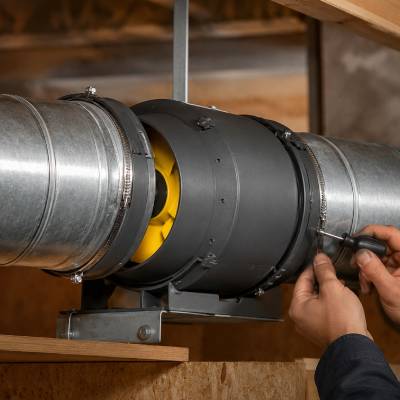
You mount an inline duct fan between two existing sections of ventilation duct. This duct usually has no direct connection to a central ventilation system, but simply carries air from inside to outside, for example from an extraction point in the bathroom or kitchen. That duct often doesn't run straight outside, but first continues on to another room, such as the attic or an adjacent room, and that's exactly where you mount the inline duct fan. The advantage of this setup is that the motor doesn't hang in the room where the air is being extracted from, but in that other spot. This results in less noise nuisance and doesn't take up any space in the living area.
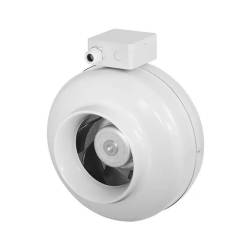
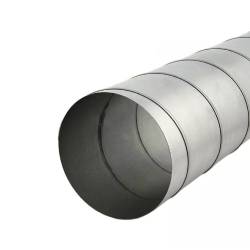
The electrical connection runs via a cable through the ventilation duct, or via a connection point on the fan itself, and is often linked to a switch that lets you operate the fan manually. With our plastic slide-in models, you slide the inline duct fan straight into the ventilation pipe, because the fan itself is narrow enough to fit inside the pipe: no extra connectors needed. With other models, you instead fit the inline duct fan between two separate pipes, using connectors that join the pipes to the fan on both sides; so this isn't done the same way for every type of inline duct fan.
How do I connect an inline duct fan to a flexible duct?
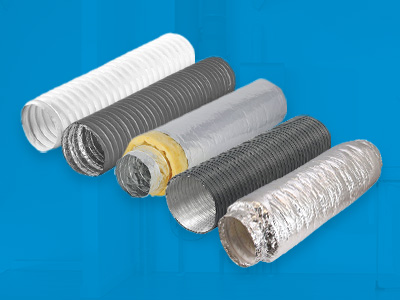
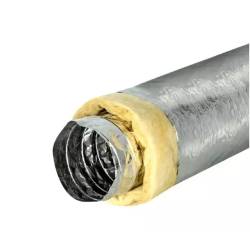
An inline duct fan can also be connected to a flexible duct, or between two flexible ducts. You often see this with bathroom ventilation, where the duct connects the extraction point to the outlet point. You usually route the duct through a dead space, such as the knee wall space under the roof or the gap above a suspended ceiling.
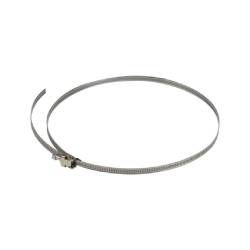
To connect the flexible duct to the inline duct fan properly and airtight, secure the joint with hose clamps; tie wraps are an alternative, but grip less firmly and are therefore less suitable for an airtight connection. When buying a duct, also choose a diameter that matches that of the inline duct fan, so the airflow isn't unnecessarily restricted. In terms of material, an aluminium duct is reliable and better resistant to higher temperatures, while a plastic duct is lighter and more flexible but less heat-resistant. Not sure which type suits your situation best? Let us know!
Step-by-step guide: how to install an inline duct fan!
Are you installing an inline duct fan yourself? These steps give you a good picture of the process, but be sure to also check out our video for a visual explanation!
- Determine the right spot in the ventilation duct, ideally outside the room you're ventilating, such as in the attic or a technical space;
- Choose ventilation ducts with the same diameter as the inline duct fan, so you make full use of the ventilation capacity;
- Slide the inline duct fan into the duct, or fit it with connectors between two ducts, depending on the model;
- Connect the inline duct fan to a fixed, hardwired power connection; if in doubt, always have this done by a certified installer;
- Want the fan to keep running automatically afterwards? Then connect the inline duct fan with a timer;
- Make sure the fan stays easily accessible after installation for maintenance and cleaning.
Watch our video about installing an inline duct fan here!
Installing an inline duct fan yourself? We've got everything you need!
Can you install an inline duct fan in an existing ventilation system?
No, it's better not to do this. An inline duct fan controls the extraction of one specific room, separate from the rest of the ventilation system in your home. If you connect an inline duct fan to a duct that's already part of an existing ventilation system anyway, more air gets drawn in than that system can handle. The system then has to work harder, which can cause it to become overloaded, reducing its lifespan and performance and increasing noise output. Want to add an extra extraction point? Then choose a separate inline duct fan with its own duct to the outside, independent of the existing system. Not sure about the right setup for your situation? Then our specialists are happy to think it through with you!
One extraction point instead of several
In practice, an inline duct fan usually isn't divided across multiple extraction points. The fan typically handles the extraction of one room, such as a bathroom or kitchen. Air always takes the path of least resistance, which means the room you actually want to ventilate gets ventilated less effectively as soon as you split the fan's power.
Dividing an inline duct fan across multiple ducts also doesn't guarantee less noise. How much noise a fan makes mainly depends on how hard the motor has to work and how much of its capacity it needs for that. The type of motor, AC or DC/EC, also plays a role here. An AC motor runs on standard alternating current and is simple and reliable, while a DC/EC motor is more energy-efficient, quieter, and easier to control. To make the most of the inline duct fan's optimal capacity, use ducts with roughly the same diameter as the inline duct fan itself.
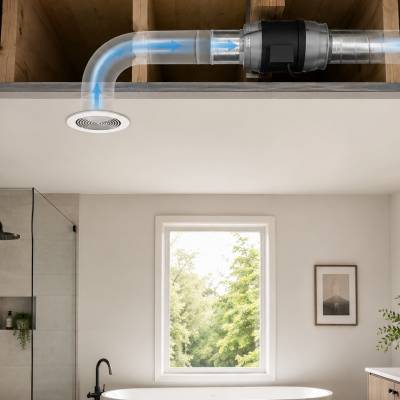
If you go from a smaller to a larger ventilation duct (or vice versa) with the inline duct fan in between, there's a risk of too much pressure building up on the fan. This can cause it to run at reduced speed and fail to reach its optimal capacity, and can shorten the fan's lifespan.
Always ensure a safe connection
An inline duct fan is almost never installed in a wet room, but rather in the ventilation duct at a dry spot just outside the room you're ventilating. As a result, the fan almost never comes into contact with moisture. Do make sure to mount the fan in an easily accessible spot, so you can keep it clean and maintain it easily. Do you still have questions about installing or connecting an inline duct fan, or another question? Then we're happy to help!
FAQ
In the FAQ below, we've clearly listed the most frequently asked questions about installing and connecting an inline duct fan. Do you have specific questions about your situation, or can't quite figure it out? Our experts are ready to help, so feel free to get in touch!
No, it's better not to do this. An inline duct fan controls the extraction of one specific room, separate from the rest of the ventilation system in your home. If you connect it to a duct that's already part of an existing system anyway, more air gets drawn in than that system can handle, which can cause it to become overloaded, reducing its lifespan and performance while increasing noise.
No, an inline duct fan needs a fixed, hardwired power connection, not a plug. If in doubt, always have the connection carried out by a certified installer.
Yes, that's possible. If you connect the inline duct fan with a timer, it automatically keeps running for a little while after use before switching off on its own.
Not really, in practice. Air always takes the path of least resistance, which means the room you actually want to ventilate gets ventilated less effectively as soon as you split the power across multiple extraction points. An inline duct fan is therefore usually used to extract air from a single room, such as a bathroom or kitchen.
With slide-in models, such as our plastic inline duct fans, you slide the fan straight into the duct. With other models, you instead fit the fan using connectors between two separate ducts. This differs per model, so always check the mounting instructions for your specific inline duct fan.
Install the inline duct fan in a dry spot in the ventilation duct, just outside the room you're ventilating, such as in the attic or a technical space. This way, the fan almost never comes into contact with moisture, and stays easily accessible for maintenance and cleaning.
Can we help you with anything else?
At Ventilationland, we think it is important that we can always be reached and answer your questions as quickly as possible. Therefore, you can reach us in several ways, including via chat or WhatsApp. We are happy to help!