


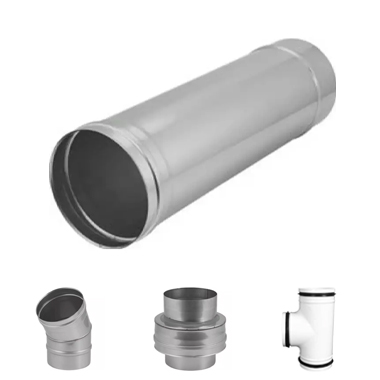

Ventilation ducts are an essential component of ventilation systems. They provide the supply of fresh air or the removal of contaminated air in buildings. To facilitate both air supply and exhaust, separate ducts are typically required for each function. This helps maintain a healthy and comfortable indoor environment. Ventilation ducts are available in various shapes and materials, each with its own specific applications and benefits.
How does ducting work?
Ventilation ducts create a controlled airflow through a building. They consist of a network of pipes that can supply and exhaust air. Fresh outdoor air is brought inside, while contaminated indoor air is expelled. This airflow is essential for maintaining good air quality and temperature control.
What are ventilation ducts commonly used for?
Ventilation ducts are commonly used in HVAC systems (Heating, Ventilation, and Air Conditioning) to ensure constant air exchange. They are essential in homes, offices, industrial buildings, and commercial spaces where healthy air quality is necessary.
Which ventilation systems are air ducts suitable for?
Air ducts are suitable for various ventilation systems, such as Mechanical Ventilation (MV) and Heat Recovery Ventilation systems (HRV). MV systems exhaust contaminated air, while HRV systems also recover heat from the exhausted air to save energy.
What different types of ventilation ducts do we offer?
At Ventilationland, we offer a wide range of ventilation ducts:
- Flat Ventilation Pipes: These pipes are ideal for limited spaces due to their flat shape, making them easy to install. They are perfect for applications where space is restricted, such as in dropped ceilings or behind walls.
- Spiral Ducts: Round ducts made of galvanized steel, known for their strength and durability. Spiral ducts are suitable for both commercial and residential applications and can be easily customized and installed.
- Thermoduct Spiral Duct: Insulated spiral ducts specifically designed to reduce heat loss. They provide excellent thermal insulation, contributing to energy savings and a more efficient ventilation system.
- Air Distribution Systems: These systems ensure even air distribution in large spaces. They are ideal for commercial buildings, such as offices and stores, where consistent airflow is essential for comfort and air quality.
- Plastic Pipes: Lightweight and rust-free, these pipes are easy to handle and install. They are resistant to corrosion and ideal for environments with high humidity, such as bathrooms and kitchens.
- EPS Ventilation Pipes: Insulated pipes made of expanded polystyrene, with excellent thermal properties. EPS pipes are lightweight and provide a high degree of insulation, making them perfect for energy-efficient ventilation systems.
- Embedded Ducts: These ducts are designed for installation in concrete, making them ideal for new construction projects. They offer seamless integration with the building structure and ensure efficient airflow.
- Thermoduct Embedded Ducts: Insulated embedded ducts specifically designed for installation in concrete. They offer the same benefits as regular embedded ducts, but with the added bonus of improved thermal insulation.
- Flexible Hoses: Flexible and easily adjustable for various applications. These hoses are ideal for tricky corners and bends where standard ducts are difficult to install. They are versatile and can be used in different configurations.
Each type of duct has its own advantages, such as easy installation, durability, or better insulation, depending on the specific needs of the ventilation system. For more information about our range and to find the right product for your project, you can click here.
In what colors can we supply the pipes?
Our standard pipes are uncoated, but we can coat almost all standard spiral ducts and most fittings in black, white, gray, and anthracite. Coatings in other RAL colors are also available upon request.
How do you connect an air duct?
Connecting an air duct involves various components, such as Socket couplings, transition pieces, bends, and couplings. These components ensure a perfect connection between the ducts, guaranteeing a smooth airflow. Make sure all connections are well-sealed to prevent air leaks and ensure the efficiency of the system.
How do you maintain a ventilation pipe?
Regular maintenance of ventilation pipes is essential for proper operation. This includes cleaning the pipes to remove dust and dirt, checking for any leaks or damages, and replacing filters as needed. Well-maintained pipes contribute to better air quality and a longer lifespan of the ventilation system.
What are the benefits of purchasing these products from Ventilationland?
Ventilationland has been delivering thousands of ventilation systems to individuals and businesses for over 20 years. Thanks to our extensive experience, we can call ourselves specialists. We are happy to share this expertise with you. Do you have a technical question? Feel free to contact us for tailored advice!
Choose Ventilationland and enjoy the best service and support when purchasing your ventilation products. Want to know more about us? Click here.