

How do I replace my MVHR unit? Read our tips and tricks

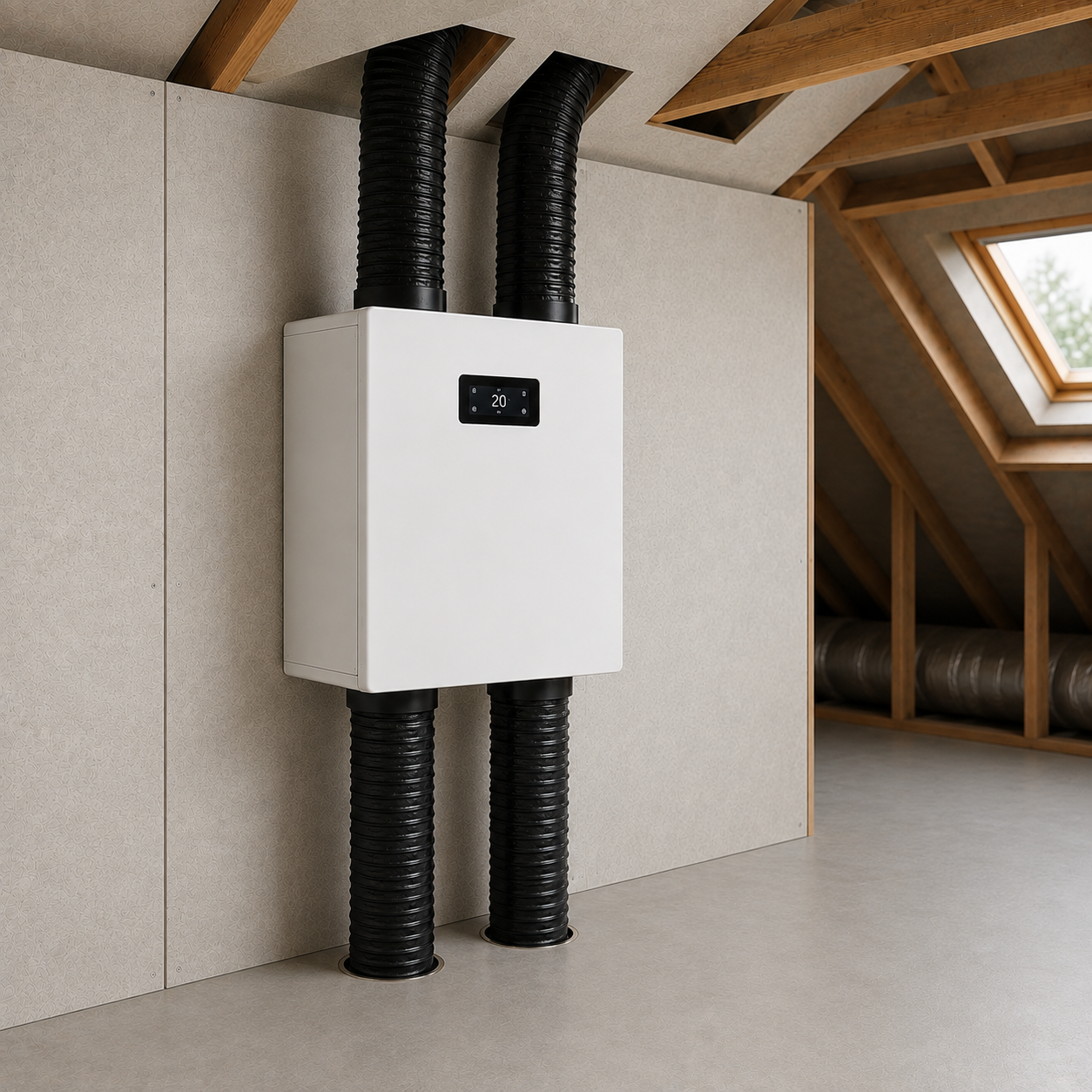
When should you replace your MVHR unit?
There are several reasons why your MVHR unit may need replacing:
- Your MVHR unit has reached the end of its lifespan (this is often the case after 10 to 15 years);
- The MVHR unit has a fault and the repair costs are (too) high;
- You want a more sustainable or more modern MVHR unit, helping you save on energy costs.
First work out whether replacement is actually necessary. Sometimes a repair or service is enough to get your MVHR unit running like new again. For example, have you noticed your current unit making more noise than before? That could mean your ventilation ducts are (too) clogged with dust and dirt, or there's a faulty motor. In cases like these, a thorough clean or replacing a specific part is sometimes all it takes. So always check this first, before deciding straight away to replace your MVHR unit for good.
Can you replace your MVHR unit yourself?
In many cases, you can perfectly well install a new MVHR unit yourself. The rebalancing that needs to follow straight after, however, is fairly technical and requires specialist knowledge: without correct rebalancing, your home simply won't have proper ventilation. That's why we recommend having the whole replacement carried out by a qualified installer. That's more convenient and saves you a sore back.
Want to do (part of) it yourself anyway? Below, we'll walk you through the steps from removal to installation and rebalancing. Whichever way you replace your MVHR unit, pay close attention to the new unit you choose. Going for exactly the same model? Then this usually isn't a problem. Choosing a different model or brand? Then pay extra close attention to the following four points.
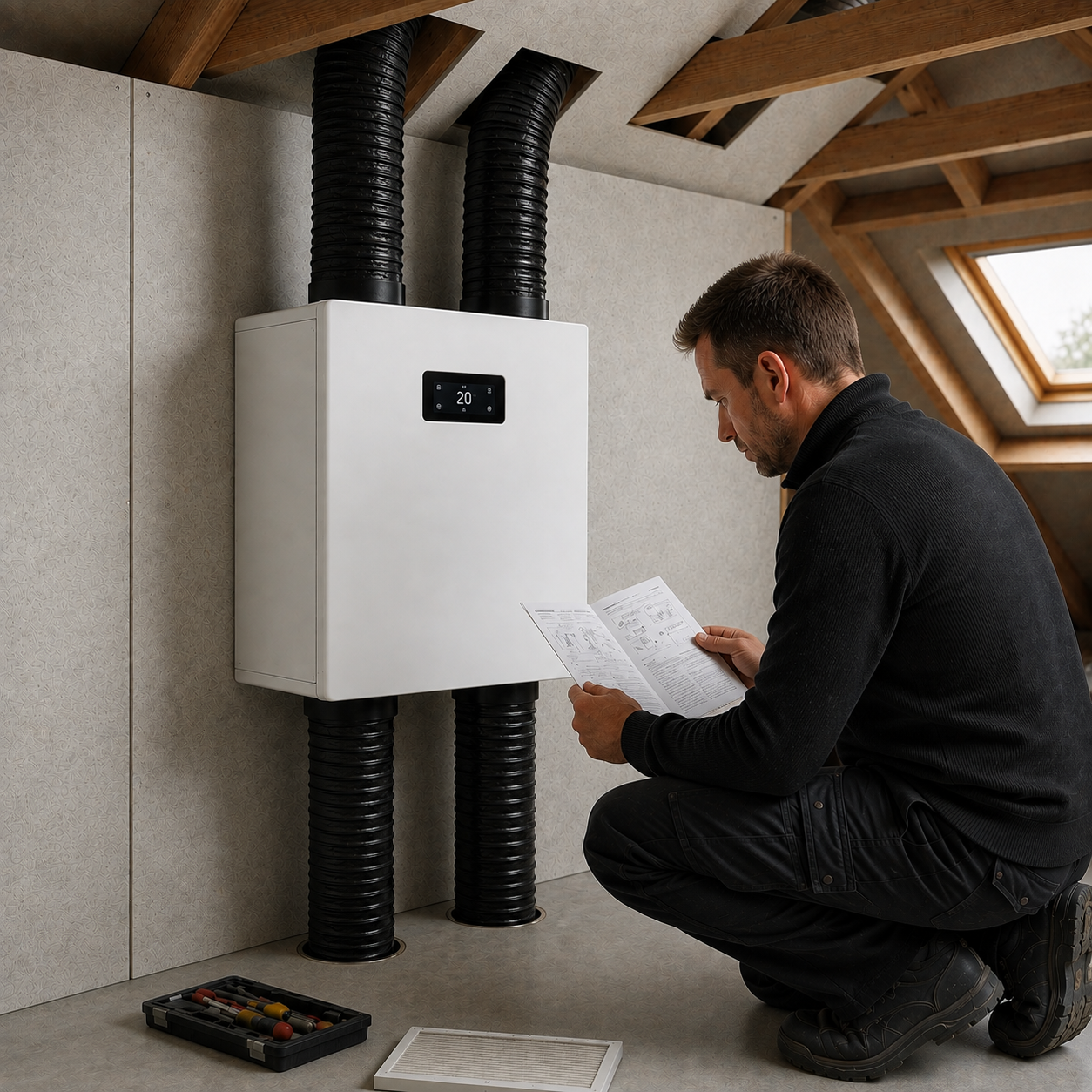
Then pay extra close attention to these four points, so your new MVHR unit connects seamlessly to your existing setup.
Size
Connections
Duct diameters
In other words: we strongly advise against choosing an MVHR unit with different connection diameters! Always go for a unit and capacity that matches your existing ventilation ducts. If you don't, moisture and CO2 may be extracted less effectively, or too quickly. This can, in turn, lead to negative pressure and dry air, or extraction that's too slow, leaving moisture hanging around in the room for longer and increasing the risk of mould and wood rot.
Capacity
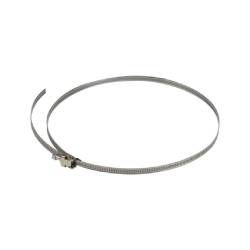
Looking for a new MVHR unit? Ventilationland is THE specialist when it comes to MVHR units! We offer a wide range for different homes, capacities and applications. On top of that, you can come to us for your complete ventilation system: from ventilation ducts and flexible hoses to fixings, valves and other accessories.
Do it yourself, or hire a certified installer? What does it cost?
Not much of a DIYer yourself? Or hesitant to install a new MVHR unit yourself? Then it can sometimes be wiser to leave the replacement to a certified installer. Having your MVHR unit replaced usually costs a few hundred euros in labour costs. Your total cost also depends on how easy the unit is to access and how much work is needed to connect everything properly. If you replace your MVHR unit yourself, you save on these labour costs, but factor in possible extra costs for new mounting materials or new connections if you can't reuse the old parts.

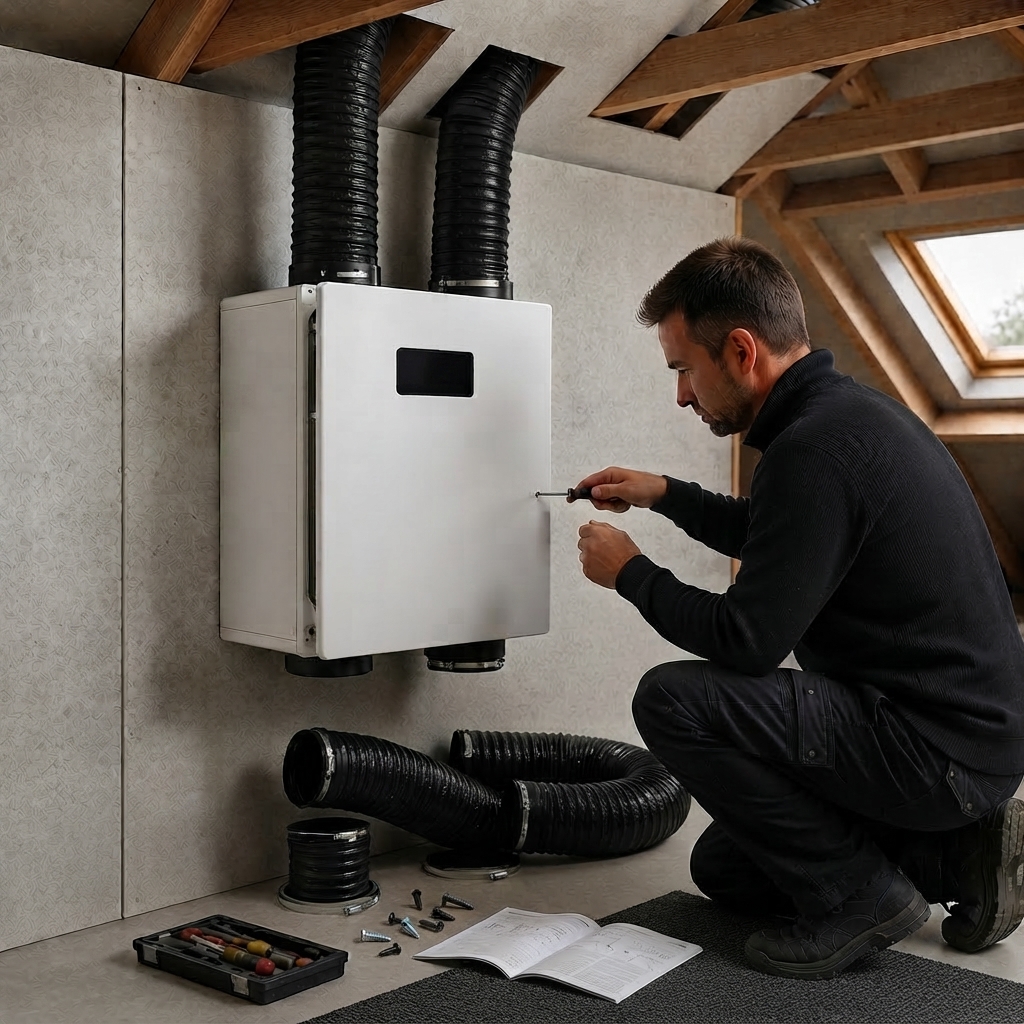
How do you remove your old MVHR unit?
To remove your MVHR unit, you can generally follow the five steps below:
- Unplug the MVHR unit from the socket;
- Disconnect the duct connections;
- Disconnect any condensate drain and sensors;
- Remove the mounting brackets or frame holding the unit in place;
- Carefully lift the MVHR unit away from its position.
Note: these steps apply to most MVHR units, but the exact disassembly may vary by brand and model.
Note: always check the manufacturer's manual for the specific disassembly of your unit. No longer have it? Check whether you can still download it online, or check the product page of your MVHR unit on our website: you'll often find the manual there under the "Documentation" heading.
For every situation, we have the right MVHR unit and accessories

How do you install a new MVHR unit?
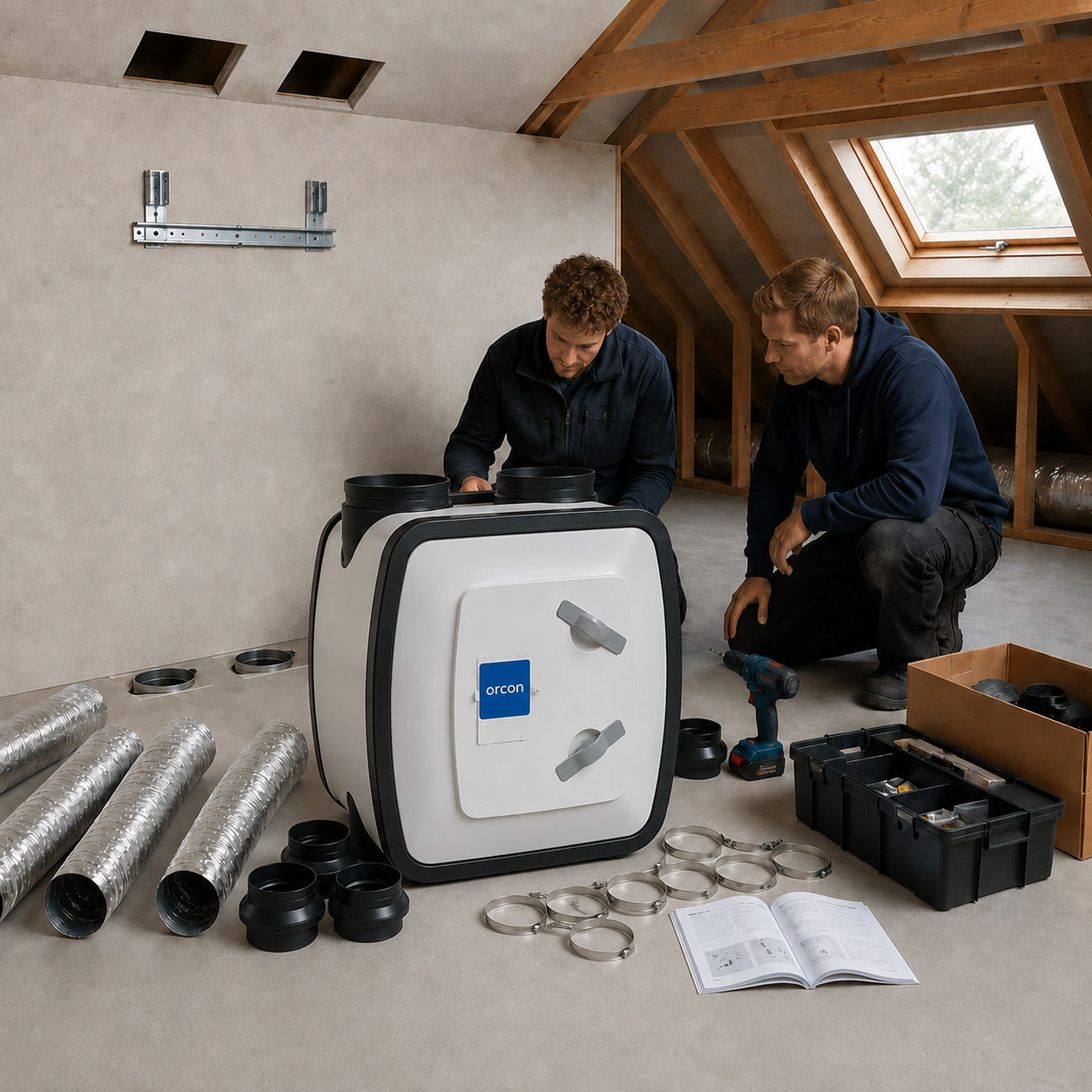
Now that your current MVHR unit is disconnected, you can start installing your new unit. Doing this yourself? Make sure you always work in pairs, partly for safety reasons. Follow these steps as a general guide:
- Physically position the new MVHR unit in the desired location and fix it securely;
- Reconnect the air ducts to the unit, making sure they're airtight;
- If necessary, connect the new condensate drain;
- Reconnect the power supply;
- Switch on the MVHR unit and, if needed, follow the start-up procedure.
This explanation also applies generally to most MVHR units. For the specific installation of your new unit, we always recommend checking the user manual of the relevant product.
How do you balance a new MVHR system?
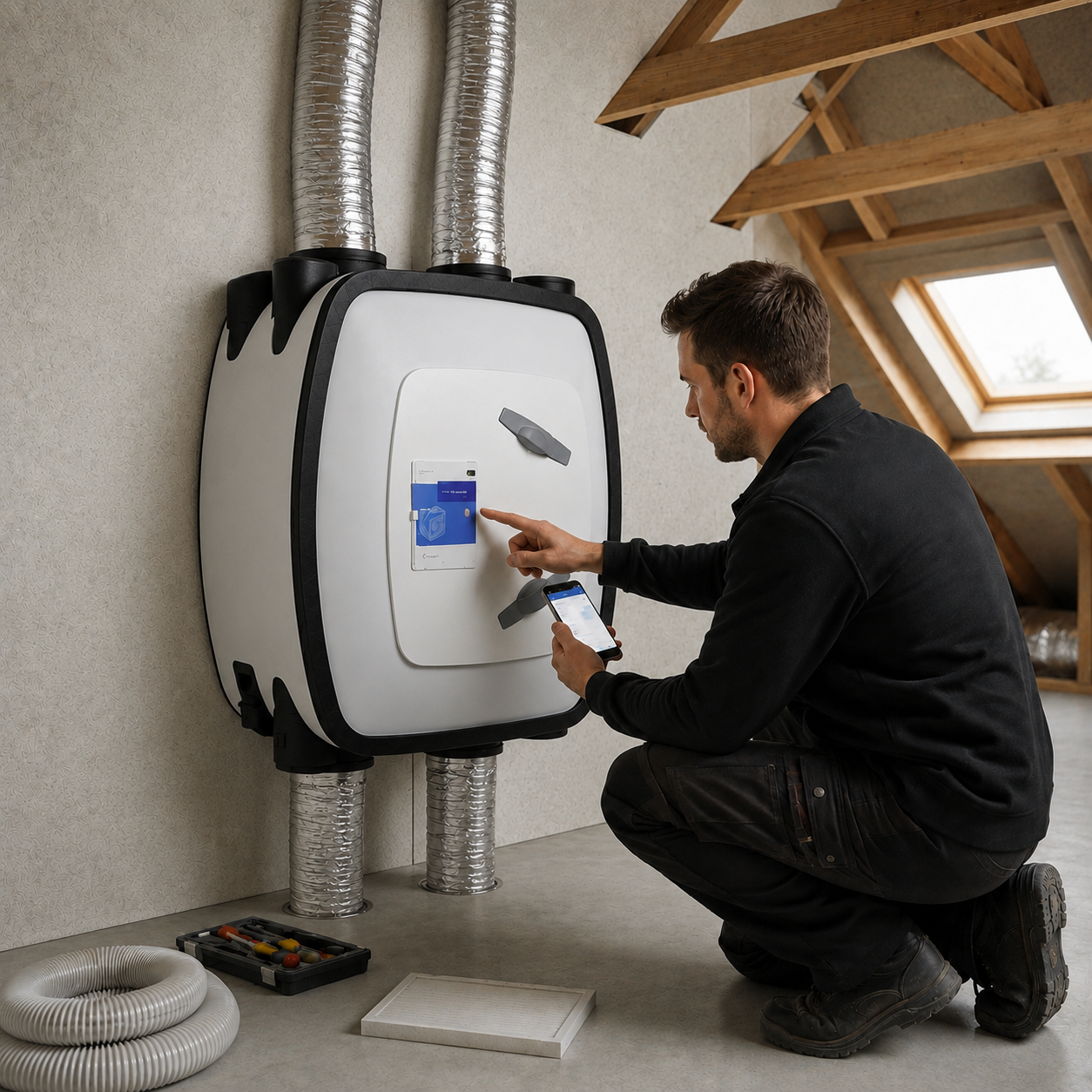
Now that your new MVHR system is installed, it needs to be balanced again. This is the most technical part of the replacement: without correct balancing, your ventilation system won't work properly, which is why we recommend having this done by an installer. Want to try it yourself anyway? Reset the settings with the corresponding airflow rates via the smart display or app of your MVHR unit.
Have these changed, and therefore the airflow rate too? Then also re-adjust the valves so the air distribution in your home is correct again.
Want to know more about using, adjusting and cleaning ventilation valves? Click here to read our in-depth blog.
Do you need (technical) support setting up your new MVHR unit? Get in touch with our specialists. They'll be happy to help.
A change in the settings of your ventilation valves isn't the only thing that determines rebalancing, by the way. Does the capacity or duct size also change (which, as mentioned earlier, we advise against)? Then this is definitely not a job to do yourself: balancing is done based on pressure resistance (expressed in Pascals) combined with capacity and air speed, a calculation that's too complex for most homeowners to carry out correctly themselves. A certified installer has the knowledge and tools to make this calculation and then adjust your MVHR unit correctly.
What else should I pay attention to when installing an MVHR unit?
Congratulations, your new MVHR unit is connected and should now be working properly. Bring on that lower energy bill! Just to be safe, also keep the following points in mind:
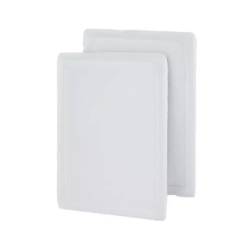
- Check your MVHR filter and clean or replace it if necessary. Also read our blog on which filters exist for the various ventilation systems;
- Replacing your MVHR unit one-to-one with the same model? Then in many cases you can simply keep using your existing filters, as long as they're clean or easy to clean (vacuuming is fine, washing or wetting is not) and the filter type stays the same. That way you save straight away on buying new filters;
- Reconnect any sensors to the new unit and make new connections;
- Clean the ventilation ducts on the unit, especially now that it's already disassembled.
Tip: don't have semi-flexible, rigid aluminium silencers on the connections of your MVHR unit yet? You can have these fitted straight away when the new unit is installed. Vibrations from the (motor of the) MVHR unit can be audible in the ventilation ducts. By placing vibration dampers directly at the connections, you prevent hearing the noise of the unit and motor in the ventilation ducts.
FAQ
In the FAQ below, we've put together a clear overview of the most frequently asked questions about replacing an MVHR unit. Do you have specific questions about your situation, or can't quite figure it out? Our experts are ready to help, so feel free to get in touch!
An MVHR unit typically lasts 10 to 15 years on average. With proper maintenance, such as regularly cleaning or replacing filters, you can extend the lifespan of your unit.
Yes, that's possible. Just make sure to pay close attention to the size, connections, duct diameters and capacity of the new unit, so it matches your existing installation.
In most cases, you don't need a permit to replace an MVHR unit, as long as you keep the existing setup in terms of layout and venting. Not sure? Get in touch with your local council.
This depends on the subsidy schemes available in your country. Check with your local authority or energy provider to see whether you qualify for a grant.
Can we help you with anything else?
At Ventilationland, we think it is important that we can always be reached and answer your questions as quickly as possible. Therefore, you can reach us in several ways, including via chat or WhatsApp. We are happy to help!