

What effect does ventilation with a bypass have on the temperature in the home?

Modern homes are increasingly well-insulated. That's great news for your energy bill in winter, but in summer the advantage works against you. A well-insulated home retains heat just as effectively as cold. On warm days, the solar heat that enters through windows and walls accumulates inside, causing the indoor temperature to rise quickly (even when it's pleasant outside). Many homeowners then habitually open windows or turn on a fan. Understandable, but not always necessary. Because anyone with a modern HRV unit most likely already has a built-in solution for exactly this problem. A solution that automatically gets to work at night, without you having to do anything. We're talking about the bypass. In this blog, you'll read what it is, how it works and what it concretely means for the climate in your home.
An HRV unit with a bypass: what is it and how does it work?
An HRV unit (Heat Recovery Ventilation) keeps your home warm in winter. But what does the system do when it's actually more pleasant outside than inside? That's where the bypass comes in. In this article, you'll read exactly what a bypass is, how it works in your ventilation system, which modern units come with one as standard, and what you'll notice when the bypass becomes blocked.
Good to know...
- A bypass allows fresh outdoor air to bypass the heat exchanger, so that cool night air flows directly into your home;
- In summer, this results in a noticeably lower indoor temperature, without air conditioning;
- Almost all modern central HRV units (from around 2010 onwards) have a built-in automatic bypass;
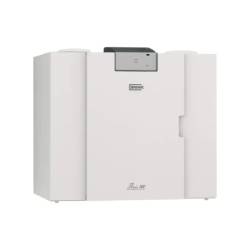
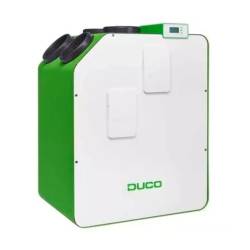
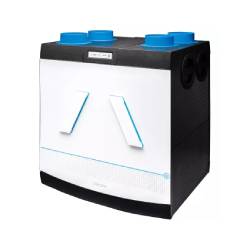
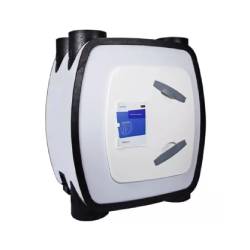
- Popular HRV units with a bypass include: Brink Flair, Duco Energy, Zehnder ComfoAir Q, Orcon HRC and Itho Daalderop HRU;
- A blocked bypass can be recognised by higher indoor temperatures in summer and reduced air quality.
What is a bypass?
In an HRV unit, fresh outdoor air flows into the home through a heat exchanger. This exchanger extracts heat from the extracted indoor air and transfers it back to the incoming outdoor air. Ideal in winter: you ventilate with fresh air without wasting energy.
In summer, this mechanism works against you. Outdoor air is often cooler in the evenings and at night than the warmed air inside. If the heat exchanger still transfers that heat to the incoming air, you end up heating your home at the very moment you want to cool it.
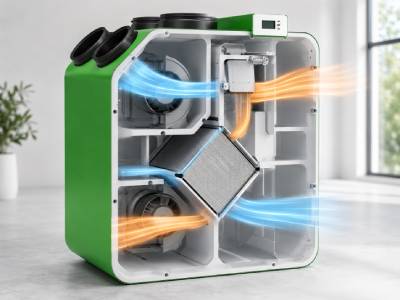
A bypass is a valve or diversion in the system that routes the incoming outdoor air past the heat exchanger. The air enters directly and untempered: unheated, but also uncooled. Exactly as the outdoor air is at that moment. The result: you make use of the cooler outdoor temperature to ventilate your home, without the heat exchanger interfering.
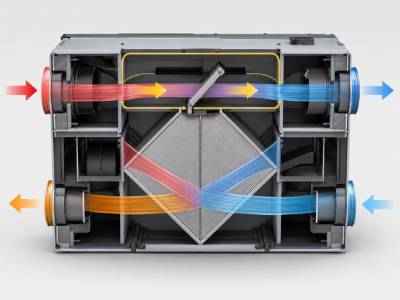
How does a bypass work?
Modern HRV units with bypass operate fully automatically. Built-in temperature sensors continuously measure the difference between the outdoor and indoor temperature. As soon as the outdoor air is sufficiently cooler than the air in your home, the bypass valve opens and fresh, cool outdoor air flows directly inside, without first passing through the heat exchanger.
When the outdoor temperature rises above the indoor temperature again, the valve closes automatically and the heat exchanger takes over once more.
Some systems offer, in addition to the automatic mode, a manual setting via a control panel or app. This allows you to activate the bypass yourself — useful if you prefer to keep the windows closed in the evening but still want to ventilate with cool night air.
Please note: not every unit has a fully automatic bypass. Older or simpler models sometimes work with a manual summer switch: a setting you switch yourself that temporarily disables heat recovery. This is functionally different from a true bypass with automatic temperature control.
Which HRV units have a bypass?
Almost all central HRV units today are equipped with a built-in automatic bypass. This applies in particular to units from around 2010 onwards, when bypass functionality became increasingly standard. Units from before that period, including cheaper entry-level models, do not always have this feature. Not sure whether your unit has a bypass? Check the manual or the type plate of your unit. Of course, you can also always ask our product experts!
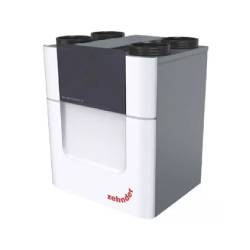
Popular HRV units with an automatic bypass:
| Brand & model | Bypass type |
|---|---|
| Brink Flair | Automatic bypass |
| DucoBox Energy Comfort | Automatic bypass |
| Zehnder ComfoAir Q | Automatic bypass |
| Orcon HRC | Automatic bypass |
| Itho Daalderop HRU | Automatic bypass |
Want to make sure a specific HRV model has a bypass function? Check the product overview on our website or contact our specialists.
What are the advantages of a bypass?
A bypass is more than just a technical extra. In practice, it delivers immediately noticeable living comfort:
- Cooler home in summer. By letting cool outdoor air in directly in the evenings and at night, the average daytime temperature in a well-insulated home drops noticeably.
- Less or no air conditioning needed. An effectively functioning bypass can make electric cooling unnecessary or significantly reduce its use in many situations, saving energy and costs directly.
- Continuously fresh air. The ventilation system remains active even in summer. CO₂ and moisture are still extracted, regardless of whether the bypass is open or closed.
- Fully automatic.
When does the bypass activate, and when doesn't it?
The bypass valve opens as soon as the outdoor temperature is sufficiently lower than the indoor temperature. For most systems, the threshold is somewhere between 2 and 5 degrees Celsius difference, depending on the manufacturer and the settings of your unit.
In practice, the bypass is most active:
- On summer evenings and nights, when the outdoor air cools down while the home is still warm from the day
- In spring and early autumn, when it's pleasant during the day but a well-insulated home still warms up
On cold winter days, the bypass remains closed and the heat exchanger works at full capacity. During prolonged heat waves where it remains tropically warm even at night, the temperature difference is too small for the system to work effectively. In that case, active cooling is the better option.
What if my bypass or HRV unit is no longer working properly?
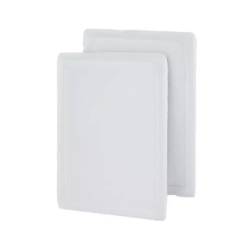
Always start by checking the filters of your HRV unit, and replace them if necessary. Dirty filters are the most common cause of reduced performance, including with the bypass. If the filters are dirty and can no longer be cleaned properly, replace them. As a rule of thumb: do this at least once or twice a year. If you live in an area with high levels of fine dust or pollen (for example, near a busy road, in an agricultural area, or in a city with significant air pollution), more frequent replacement is recommended.
Conclusion
An HRV unit with bypass gets the most out of your ventilation system, both in winter and in summer. In summer, the bypass creates a cooler and fresher indoor climate without extra energy consumption, by cleverly making use of the temperature difference between day and night. Almost all modern central HRV units, including the Brink Flair, Zehnder ComfoAir Q, Orcon HRC, Itho Daalderop HRU and Duco Energy, are equipped as standard with an automatic bypass.
Popular HRV units with an automatic bypass
Can we help you with anything else?
At Ventilationland, we think it is important that we can always be reached and answer your questions as quickly as possible. Therefore, you can reach us in several ways, including via chat or WhatsApp. We are happy to help!