

How do you choose the right ventilation grille for each room?

Which ventilation grille is best suited for which room?
Good ventilation is extremely important for a healthy indoor climate. A ventilation grille plays a bigger role in this than is often thought. The grille not only determines how air enters or leaves a room, but also how comfortable, quiet, safe and easy to maintain the ventilation solution is. Which ventilation grille is most suitable depends on the room, the function of the grille and the way the air is moved. Is it for natural ventilation, where air flows through an opening without a fan? Or is the grille used as a finishing element or protection for a duct connected to a ventilation system or fan? Material, shape, placement and closability also play an important role.
At Ventilationland, you will find a wide range of ventilation grilles for, among others:
In this blog, we explain for each room what you should pay attention to and which type of grille is often the best choice in practice.

What is the function of a ventilation grille?
Before choosing a ventilation grille, it is important to determine what the grille will be used for. Broadly speaking, there are two applications: natural ventilation and ventilation via a system or fan. With natural ventilation, the grille allows air to flow in or out naturally. Think of a grille in an external wall, door, window frame or floor. In that case, it is important that sufficient air supply and air extraction are possible. For example, if you install a grille for natural ventilation in an external wall, a grille is often needed on both the outside and the inside. The external grille protects against rain, dirt and insects, while the internal grille neatly finishes the opening and distributes the airflow in the room.
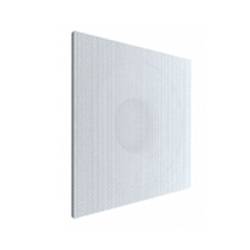
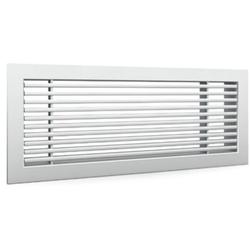
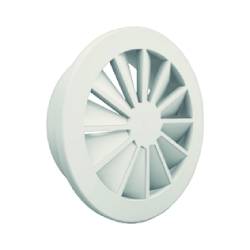
With ventilation-system-controlled ventilation, air is actively supplied or extracted via a fan, extractor hood, mechanical ventilation system or heat recovery ventilation unit. The grille often serves as a finish for the duct, protection for the system or distribution of the airflow. In that case, you can think of an external grille, louvre grille, ceiling grille, linear grille, swirl diffuser or valve.
The right choice therefore depends on the situation. A closable grille is useful when you want to decide yourself when air flows through it. A louvre grille is particularly suitable when you want to limit the backflow of cold air, rain or insects. For a sleek interior finish, ceiling grilles, linear grilles or plaster-in grilles are often used.
Which ventilation grille material should you choose?
The material of a ventilation grille is also important. Not every material is equally suitable for every room. In damp rooms, such as the bathroom, a plastic or stainless steel grille is often a logical choice. Plastic is smooth, lightweight, easy to maintain and less sensitive to moisture. Stainless steel is rustproof, strong and durable, making it well suited to damp or intensively used spaces.
For outdoor use, aluminium, stainless steel, plastic or galvanised steel is often chosen. For applications where warm air, cooking steam or grease particles pass through, such as in the kitchen or near an extractor hood, a heat-resistant and easy-to-clean material is important. Stainless steel is often a safe and durable long-term choice in such situations. Also pay attention to maintenance. A smooth grille is easier to clean than a grille with many small openings or deep louvres. Especially in kitchens, bathrooms and toilets, regular cleaning is important to maintain proper airflow.
Which ventilation grille is best suited for the bathroom?
Good ventilation is essential in a bathroom. A lot of moisture is produced during and after showering. If this moisture is not properly extracted, it can lead to condensation, mould growth and musty odours. The right bathroom grille helps to quickly extract humid air or allow sufficient fresh air in. For natural ventilation in the bathroom, a closable ventilation grille is often a practical choice. This allows you to provide extra ventilation when needed, for example during or shortly after showering. Afterwards, you can close the grille again to limit cold draughts in the bathroom. This is especially pleasant when the grille is directly connected to outdoor air.

Are you using a grille behind or near a bathroom fan? Then it is especially important that the grille on the outside does not restrict the airflow too much. An external grille with louvres or a flap is often chosen, so that rain, dirt and insects are less likely to enter. At the front of a bathroom fan, you normally do not need an additional grille, because this is already part of the fan itself. Only with an inline duct fan or a branch of the ventilation system may a separate grille or valve be needed on the inside.
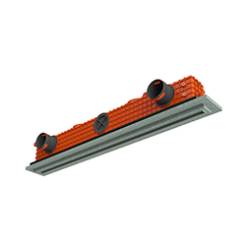
When the grille is connected to a ventilation duct or ventilation system, there are several options. For a neat finish in the bathroom, you can choose, for example, a ceiling grille, swirl diffuser, linear grille or plaster-in grille. These grilles are suitable when aesthetics are important and the grille needs to blend nicely into the wall or ceiling. In addition to extraction, sufficient air supply is also important. A bathroom fan or ventilation system can only work properly if air can also flow into the bathroom. For this, transfer grilles or door grilles are often used. They allow air from, for example, the hallway or landing to enter the bathroom, after which humid air is extracted via the ventilation system or fan.
Do you have a question about using or installing a bathroom grille? Please contact us!

Which ventilation grille is best suited for the kitchen?
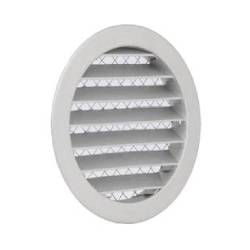
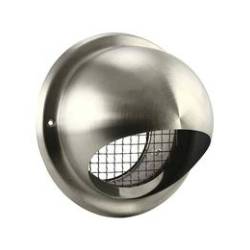
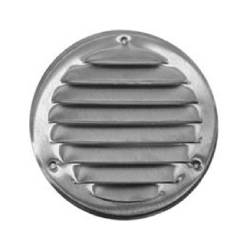
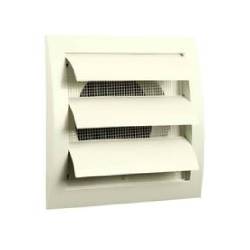
In the kitchen, moisture, grease particles, odours and fine dust are released during cooking. If you cook with gas, combustion gases such as nitrogen dioxide (NO2) may also be produced. Good extraction and sufficient air supply are therefore important. For an extractor hood, a louvre grille is often recommended. The louvres help prevent cold air from entering through the flexible duct and the extractor hood. They also reduce the chance of insects entering through the duct. Spherical grilles and grilles with a weather hood are also often used for extraction to the outside. Like louvre grilles, these are usually mounted on the external façade, where protection against rain, wind and dirt is important.
For a ventilation grille for the kitchen, the material is particularly important. Due to heat, steam and grease, a strong and easy-to-clean material is recommended. Stainless steel is a durable choice in many kitchens, as it is rustproof, sturdy and highly resistant to intensive use. Plastic can also be suitable, but is less logical in places where higher temperatures or heavy grease deposits occur.
In addition to extraction for cooking, appliances such as ovens, refrigerators and dishwashers sometimes also need extra ventilation. These appliances produce heat and must be able to release it properly. For this, plinth grilles are often used. A plinth grille ensures that sufficient fresh, cooler air can reach a kitchen setup or piece of furniture, allowing appliances to ventilate properly. The warm air can then escape through the opening above the housing or via the ventilation space intended for that purpose.
Tip: Set your extractor hood to a sufficiently high setting while cooking or baking and leave it on for a short while after you have finished cooking. This gives humid and polluted air more time to be extracted. Do you need help choosing or installing a kitchen grille? We would be happy to hear from you.
Popular categories
Which ventilation grille is best suited for the bedroom?
A well-ventilated bedroom is important for your health, sleep quality and concentration. While sleeping, you produce CO2 and moisture. If insufficient fresh air is supplied, the air quality can deteriorate. This can affect how easily you fall asleep, how rested you feel when you wake up and how fresh the room feels. In bedrooms, continuous air supply is particularly important. Unlike wet rooms, a bedroom is usually not an extraction point for mechanical ventilation. A standard mechanical ventilation system mainly extracts air from the bathroom, kitchen and toilet. Only with central or decentralised heat recovery ventilation can there also be active air supply or extraction in the bedroom.

For bedrooms, window frame grilles, window grilles or subtle internal grilles are often a good solution. They provide a constant supply of fresh air without you having to keep a window open all the time. Plinth grilles can also be used in some situations, for example when air needs to circulate through a furniture construction or a specific opening. In the bedroom, preferably choose a grille that allows sufficient air to pass through, while limiting draughts and noise as much as possible. A closable or adjustable grille can be useful when you want to adjust the airflow, but fully closing it is not always desirable. Especially in the bedroom, continuous ventilation is usually better for air quality.
In our wide range, you will find ventilation grilles for different interior styles, colours and applications, including white, black, aluminium and stainless steel grilles.

Which ventilation grille is best suited for the toilet?
For the toilet, it is important that polluted air and unpleasant odours are extracted quickly. However, a grille in the external wall is usually not the best solution. Fresh air from outside can disrupt the airflow, causing polluted air to spread further through the home. That is the opposite of what you want to achieve. For a toilet, it is usually better to supply air from within the home, for example from the hallway or landing. This air then flows towards the extraction point, such as a toilet fan or mechanical ventilation point.
For this, transfer grilles or door grilles are often the most suitable choice. A transfer grille or door grille ensures that sufficient air can flow into the toilet, even when the door is closed. This allows the ventilation system or toilet fan to function more effectively. For the extraction side, depending on the connection, you can choose a valve, ceiling grille or wall grille.
Popular ventilation grilles
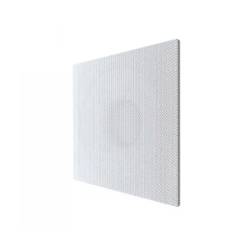
What should you take into account when installing a ventilation grille?
Always choose a ventilation grille that matches the diameter or dimensions of the ventilation duct or opening. Therefore, carefully check the specifications of the grille. Pay attention to the connection diameter, external dimensions, free air passage, mounting method and suitability for indoor or outdoor use. Also consider the location where the grille will be installed. An external grille must be able to withstand rain, wind, dirt and insects. An internal grille should mainly match the function and appearance of the room. In a bathroom, for example, you may want moisture resistance and possibly closability, while in a bedroom, quiet, continuous air supply is especially important.
With natural ventilation, it is important that air can come from somewhere and flow somewhere else. A single grille does not always provide sufficient air renewal. Sometimes two grilles are needed: one on the outside and one on the inside of a wall duct. In other situations, a combination of supply grilles and extraction grilles is needed to create a proper airflow. With ventilation ducts or ventilation systems, you should make sure that the grille does not slow down the airflow too much. A grille that is too small or incorrectly chosen can cause additional resistance, making the system work less effectively or produce more noise. Are you unsure about installation or choosing the right option? Please contact us!
Are you looking for a suitable grille for this application? Then view our plinth grilles and similar grille solutions.
When should you choose a ventilation valve instead of a ventilation grille?
- A ventilation valve and a ventilation grille may look similar, but they are not always used for the same application. A ventilation grille is often used as a finish for an opening in a wall, door, ceiling, floor or façade. A ventilation valve is usually used on a round ventilation duct connected to a mechanical ventilation system or heat recovery ventilation unit.
A valve is especially useful when the airflow needs to be regulated more precisely. Many valves are adjustable, allowing the amount of supplied or extracted air to be better balanced. That is why ventilation valves are often seen in bathrooms, toilets, kitchens, utility rooms and heat recovery ventilation systems.
Choose a ventilation valve when:
- the grille is connected to a round ventilation duct;
- the airflow needs to be adjustable;
- it is part of mechanical ventilation or heat recovery ventilation;
- you are looking for a neat, functional finish for a ceiling or wall.
Choose a ventilation grille when:
- it concerns natural ventilation through a wall, door, floor or façade;
- you want to finish or protect an opening;
- you need an external grille, louvre grille, door grille, plinth grille or transfer grille;
- the airflow does not need to be precisely adjusted.
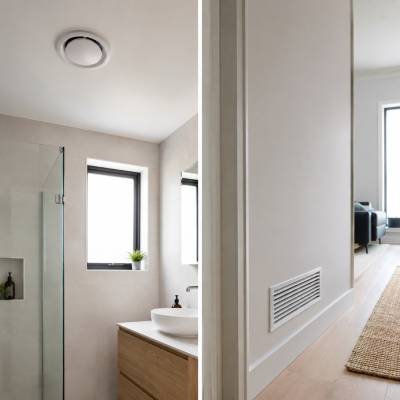
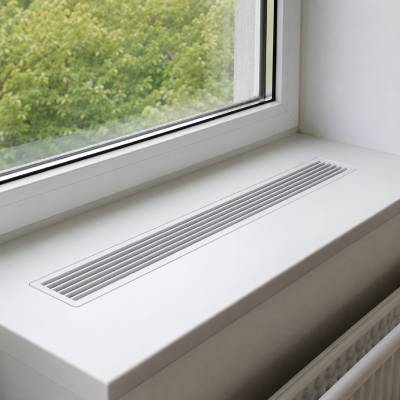
When should you choose a window sill grille?
A window sill grille usually has a different function from a standard ventilation grille in a wall, door or ceiling. Window sill grilles are often used above radiators or convectors. Because the radiator or heater is often located underneath the window sill, the window sill can block the rising warm air. A grille in the window sill ensures that warm air can still rise properly and circulate better throughout the room. This means a window sill grille is often compared to a radiator grille. Both are designed to let warm air pass through more effectively and limit heat build-up under the window sill. This can contribute to better heat distribution in the room.
How do you maintain a ventilation grille?
A ventilation grille works best when it is clean. Dust, grease and dirt can restrict the airflow. As a result, the ventilation system works less efficiently and the air quality can deteriorate. Therefore, clean a ventilation grille regularly with a cloth, brush or vacuum cleaner. In the kitchen, it may be necessary to remove grease residues more often. In the bathroom, it is especially important to prevent dust and moisture residues from building up. For external grilles, also check whether leaves, dirt or insects are blocking the opening.
Would you like more tips and information about cleaning a ventilation grille? Click here.

Our specialists are ready to help and advise you!
Are you unsure whether to choose a ventilation grille, door grille, plinth grille, external grille or ventilation valve? Our ventilation specialists will be happy to help you choose the right solution for your situation. Also view our range of ventilation grilles and choose the grille that suits your application.
Do you have any other questions after reading this blog about grilles and/or valves, or about using them? We would be happy to hear from you! You can reach us via WhatsApp, phone, email or chat.
Can we help you with anything else?
At Ventilationland, we think it is important that we can always be reached and answer your questions as quickly as possible. Therefore, you can reach us in several ways, including via chat or WhatsApp. We are happy to help!