

Combining air conditioning and ventilation: is it possible?

Is it possible to use air conditioning and ventilation together?
More and more homes have both a ventilation system and air conditioning. This makes sense: ventilation provides fresh air, while air conditioning ensures a pleasant indoor temperature. But how do air conditioning and ventilation work together? Can you connect an air conditioner to your ventilation system? And do they conflict with each other? In this blog, we explain it all to you: from the basic principles to practical tips for the best combination.
The key points from this blog at a glance:
- We strongly advise against connecting an air conditioner to ventilation ducts in a standard home (moisture damage, noise, pressure resistance);
- A portable air conditioner does not work together with an MVHR unit because of an open window; a split air conditioner and an MVHR unit do work together;
- An MVHR unit with an enthalpy exchanger works most efficiently together with an air conditioner;
- Never switch off your ventilation system when the air conditioner is on;
- Set up ventilation and air conditioning via a smart home device (for example Google Home) for the smartest combination.
What is ventilation and how does it work?
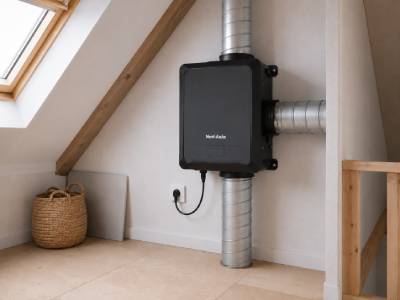
Ventilation replaces stale indoor air (with CO₂, moisture and odours) with fresh outdoor air. This can be done in various ways: natural ventilation (A), mechanical extract ventilation (C or C+), balanced ventilation and MVHR unit (D). With balanced ventilation and an MVHR system, both the supply and extraction of air are mechanically controlled. Here, a heat exchanger reuses the heat from the extracted indoor air to preheat or cool the incoming outdoor air. Would you like to know more about the different ventilation types (A, B, C, D and E)? Click here to read our blog!
How does air conditioning work?
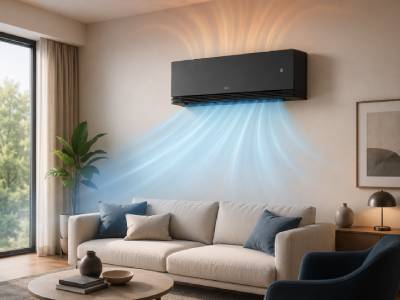
An air conditioner works with a refrigerant that extracts heat from the indoor air and releases it outside via the outdoor unit. The cooled air is blown back into the room. The air conditioner recirculates the indoor air, without supplying fresh outdoor air. Modern air conditioners are almost always inverter heat pumps: they can also heat. In winter, the outdoor unit extracts heat from the outside air via the refrigerant, even at freezing temperatures. That heat is transported via the refrigerant to the indoor unit, which transfers the heat to the air in the room and blows it back into the room as warm air. This makes them an energy-efficient addition to the central heating boiler.
More and more households are now saving on their energy costs by heating with their air conditioner instead of their central heating. Want to know everything about air conditioners? Click here.
Can I connect an air conditioner to my ventilation system?
We strongly advise against this. An air conditioner moves a much larger volume of air than ventilation ducts are designed for. Forcing that cooled air through narrow ducts can lead to:
- High pressure resistance. The air conditioner works much harder than necessary and consumes too much energy.
- An annoying or whistling noise in the ventilation ducts.
- Condensation and moisture damage. Ice-cold air cools the wall of a ventilation duct significantly, causing moisture from the surrounding area to condense on the ducts. If there is no proper vapour-tight insulation, this almost always leads to mould and leaks above the ceiling.
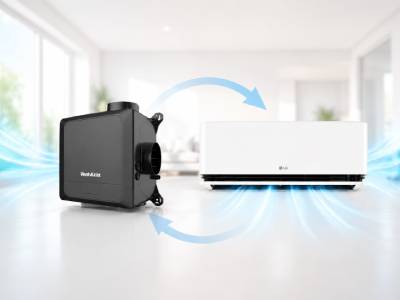
In short: an air conditioning unit and a ventilation system are two separate systems that are best kept separate. So it is not a good idea to connect them to each other.
Can an air conditioner and ventilation system work together?
That depends on the type of ventilation system you have. With mechanical extract ventilation (system C), in practice there is hardly any conflict with an air conditioner. With an MVHR unit (system D), it is more nuanced: one combination works perfectly well, while another does not. Below, we have listed the different situations for you, including whether or not they are a good match.
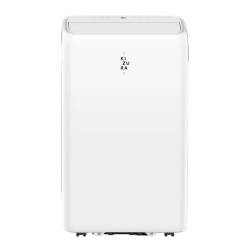
A portable air conditioner and MEV units or an MVHR unit: a poor combination
Connecting a portable air conditioner to MEV units or an MVHR unit leads to problems. A portable air conditioner has an exhaust hose that hangs through an open window or wall. That open window does two things at the same time: it removes warm air, but also lets outdoor air back inside. At the same time, the portable air conditioner extracts air from the room. The result: the balanced ventilation system becomes completely unbalanced. The MVHR unit no longer knows what it should supply and extract, causing efficiency to drop sharply and the MVHR system to become overloaded.
A split air conditioner and an MVHR unit: a great combination
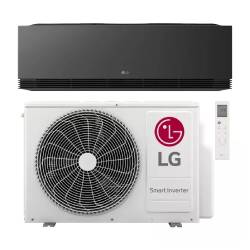
Single-split and multi-split air conditioners do work well together with an MVHR unit. These air conditioners do not extract air, but recirculate the indoor air. The MVHR unit simply remains balanced. In fact, the air conditioner can enhance the MVHR system. The air conditioner preheats or cools the air in the room. When the MVHR system then extracts that air, it passes through the heat exchanger, which extracts extra heat (or coolness) from it to pre-condition the incoming outdoor air. This means the air conditioner needs to use less energy to reach the final temperature.
An MVHR unit with an enthalpy exchanger: the best match
An air conditioner removes a lot of moisture from the air. A standard MVHR unit only recovers heat, not moisture. Especially in winter, when the air conditioner also heats, this can make the indoor air extremely dry.
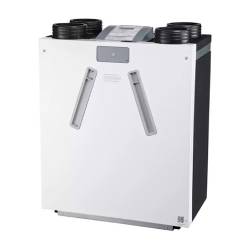
An MVHR unit with an enthalpy exchanger solves this: in addition to heat, the polymer membrane also recovers moisture.
- In summer: the indoor air is drier than the outdoor air. The membrane transfers moisture from the incoming outdoor air to the extracted air. As a result, the incoming air is drier, so the air conditioner does not have to work as hard to cool.
- In winter: warm indoor air retains more moisture. The membrane transfers that moisture to the drier outdoor air. The incoming air is more humid, making heating more efficient.
The position of your air conditioner in relation to grilles and valves
A practical but often overlooked point: make sure the air conditioner does not blow air towards a ventilation valve or ventilation grille. If it does, the cooled or heated air is extracted immediately, before it has done its job. As a result, the air conditioner runs at full power without the room reaching the desired temperature. In other words: you consume unnecessarily high amounts of energy, which you will see reflected in your energy bill. In addition to positioning, there is another important practical aspect: whether you should switch the ventilation on or off when the air conditioner is running.
Can I switch off the ventilation when the air conditioner is on?
Our advice: never do this. Ventilation is crucial for the air quality in a room: it removes CO₂, moisture and odours. An air conditioner cannot and does not do any of this. The two systems complement each other and can therefore always be switched on at the same time.
Should I close my ventilation grilles when the air conditioner is on?
This is a little more nuanced. Open ventilation grilles let warm outdoor air in, which means the air conditioner has to work harder. Our advice: close the grilles on the sunny side and keep them open on the shaded side. This ensures a sufficient supply of fresh air without putting unnecessary strain on the air conditioner. Do you have an MVHR unit? Then open windows or ventilation grilles are not recommended anyway, as they can disrupt the balance of the MVHR system. Do you want to optimise the cooperation between air conditioning and ventilation even further? Then a smart home system offers the solution.
Do air conditioning and ventilation communicate with each other?
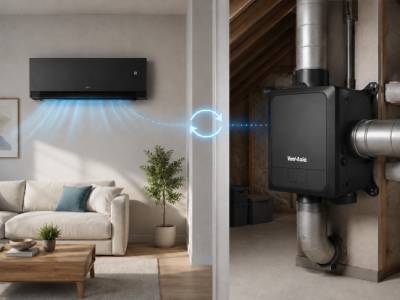
Basically: no. The air conditioner controls the temperature, while the ventilation system controls the air renewal. They work in parallel, not together. But via a smart home system such as Google Home, you can make them work together intelligently. Think of:
- Automatically closing the summer night cooling (bypass valve) of the MVHR unit as soon as the air conditioner switches on. This way, the MVHR unit does not blow warm outdoor air inside while the air conditioner is trying to cool. Want to know more about a bypass? Click here.
- Lowering the ventilation setting when the air conditioner is running at full power, so cooled air stays in the room for longer.
Whether the systems are intelligently connected or not: both require regular maintenance to keep functioning properly. Filters play a crucial role in this.
Do not forget filter maintenance: air conditioning and MVHR unit
Both an air conditioner and the MVHR unit have filters that need to be checked and/or replaced regularly. Dirty filters reduce the efficiency of both systems, increase energy consumption and worsen the air quality in the home.
The filters of an air conditioning unit
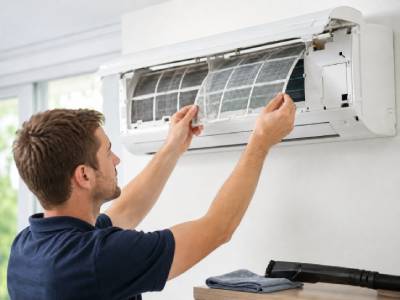
The indoor unit of a split air conditioner has built-in filters. With intensive use: clean the filters every 2 to 3 months. In most modern air conditioners, the filters are washable. You can easily clean your filters by following the steps below.
- Remove the filters from the air conditioning unit.
- Vacuum them clean with a vacuum cleaner (with brush), or rinse them with lukewarm water.
- Important: allow the filters to dry completely before placing them back in the air conditioning unit. Never put them back when a filter is still wet/damp.
Are the filters of your air conditioning unit damaged? Then they need to be replaced. With normal use, this is only necessary after a few years.

The filters of an MVHR unit
Checking and replacing MVHR filters is sometimes forgotten, even though this is just as important. As a rule of thumb:
- The coarse pre-filters (protect the heat exchanger): check them every 3 months and replace them if necessary, on average 2 to 4 times per year.
- The finer filters (such as F7 filters for fine particles): replace these approximately once a year.
Always check the manual of your MVHR unit for the manufacturer’s exact interval recommendations.
How do I know when the filters of my MVHR unit need replacing?
Many modern MVHR units give a signal via a light or notification on the display. Do you also notice that the ventilation is working less effectively, that the system is noisier than usual or that the air quality is deteriorating? Then it is high time to check the filters. Make sure you order the correct filter class and the correct size for your unit. Cheaper or incorrect filters may seem attractive, but they reduce the efficiency of your system and offer less protection for the heat exchanger.
Conclusion
In summary:
- Connecting an air conditioner to ventilation ducts: do not do this because of moisture damage, noise and pressure problems.
- Portable air conditioner and MVHR unit: a poor combination. The open window disrupts the balanced ventilation.
- Split air conditioner and MVHR unit: a great combination. They even enhance each other.
- MVHR unit with enthalpy exchanger: the smartest choice if you also have an air conditioner.
- Never switch off ventilation when the air conditioner is on.
- A smart home system makes the combination even more efficient.
- Regularly clean the filters of both the MVHR unit and the air conditioner for optimal efficiency.
View our range of ventilation and air conditioning

Questions about air conditioning or ventilation? Ask our product experts!
Are you unsure which ventilation system best suits your home, or do you want to know which air conditioner works well with your current installation? Our team will be happy to help. Whether it is a simple question or detailed advice: we are happy to think along with you.
At Ventilationland, you will find a wide range of ventilation systems, air conditioning units and accessories from several well-known premium brands. This way, you can be sure you will always find a high-quality solution that suits your situation and budget.

FAQ
Below you will find a number of popular questions about combining ventilation and air conditioning. Click on the relevant question or the plus sign on the right to view the answer. Is anything still unclear after reading? Let us know!
Can we help you with anything else?
At Ventilationland, we think it is important that we can always be reached and answer your questions as quickly as possible. Therefore, you can reach us in several ways, including via chat or WhatsApp. We are happy to help!